
A Decade of Stewardship: Celebrating 10 Years of Conservation Success with the Bureau of Land Management in Colorado


By: Karina Puikkonen
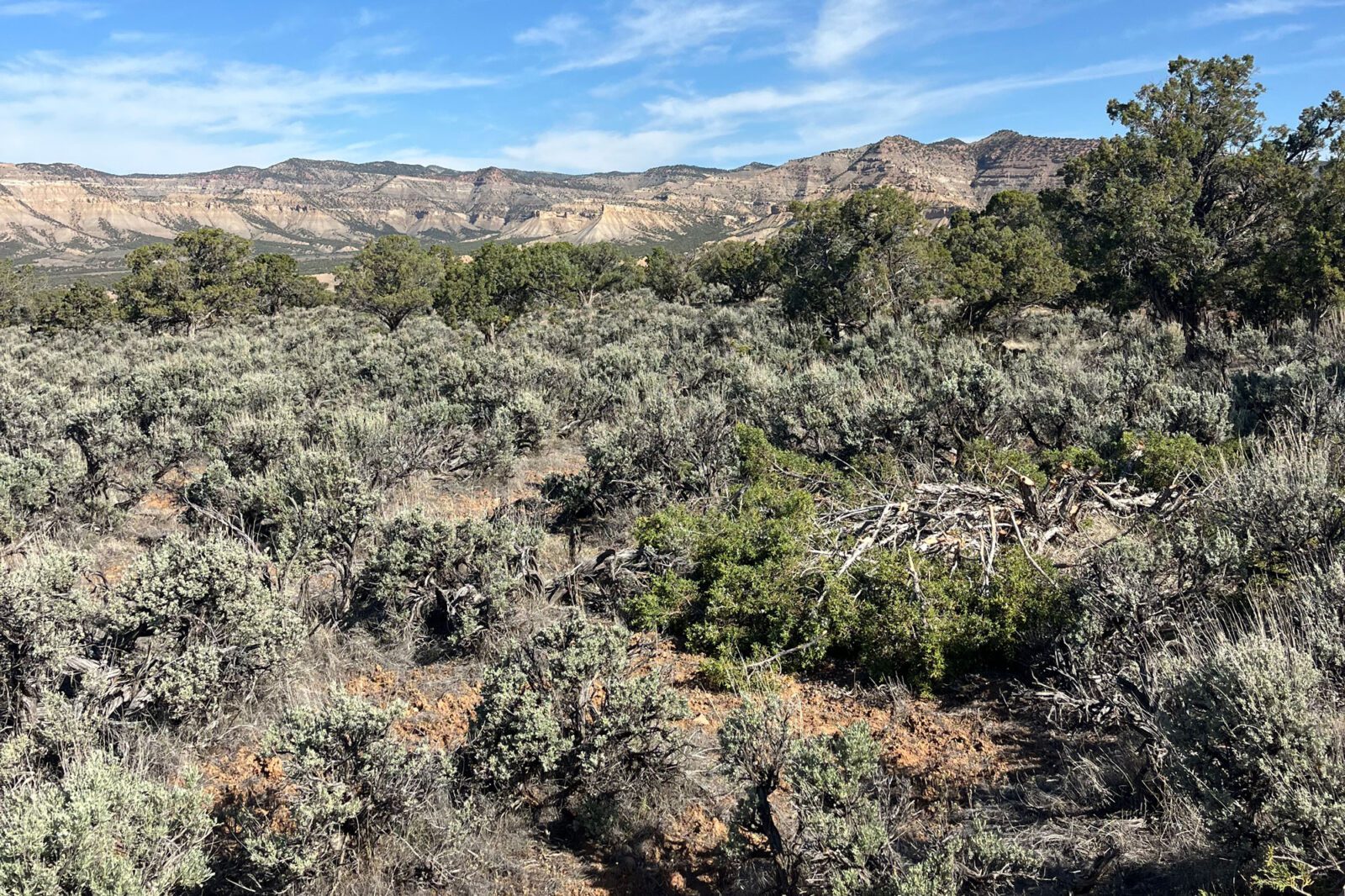
When the Bureau of Land Management (BLM) and the Mule Deer Foundation (MDF) signed a groundbreaking 10-year Colorado stewardship agreement in 2015, both organizations ventured into uncharted territory. As the first partnership of its kind in the nation, this pilot program tested whether long-term conservation agreements could deliver meaningful results for wildlife, wildfire mitigation, and ecosystem health in the state. Ten years later, this pilot agreement has achieved great success, producing tangible results across thousands of forest and sagebrush acres newly restored throughout Northwest Colorado and the state’s Western Slope.
Decades of pressure from fire suppression, drought, land use changes, and population increases have put Colorado’s forest and sagebrush ecosystems at severe risk of wildfire. Northwest Colorado’s large mule deer populations are also still struggling to recover from severe winters, the most recent occurring in 2023. Focusing on habitat restoration is a proven way to help mule deer herds because these efforts improve forage availability, habitat connectivity, and ecosystem functionality.
An Effective and Flexible Agreement
The numbers tell a compelling story of a statewide agreement that has illustrated sustained commitment and collaborative achievement. What began as one hand-thinning project near Meeker in 2016 has grown into coordinated, landscape-scale restoration efforts across multiple field offices. Through strategic pinyon-juniper removal, mechanical and hand thinning treatments, plant and archaeological surveys, invasive weed control, and native sagebrush restoration, MDF and the BLM have helped to alleviate one of the region’s most pressing challenges: severe wildfire risk from decades of dense conifer growth and woody encroachment into vital sagebrush ecosystems that mule deer depend on for survival. Through the 2015–2025 statewide agreement, this partnership has helped to restore 10,050 acres to date.
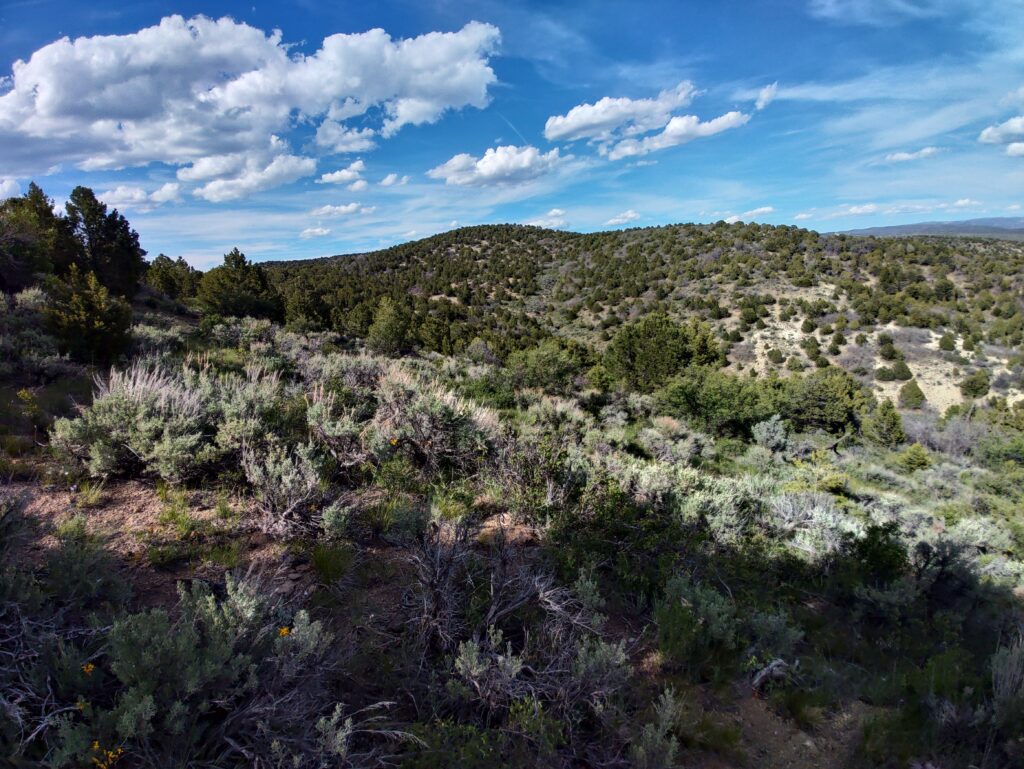
What made this MDF-BLM Colorado statewide agreement truly remarkable wasn’t just the acreage treated, it was the flexibility and efficiency allowed for effective conservation delivery. Unlike traditional short-term agreements that expire after three to five years, this decade-long partnership allowed for strategic planning, relationship building with local BLM staff and contractors, and the ability to respond quickly when opportunities arose. When BLM field offices identified urgent needs or secured additional funding, MDF could mobilize rapidly, ensuring that critical dollars translated directly into on-the-ground conservation.
Signature Landscape Projects: A Decade of Habitat Restoration Across Colorado
Between 2015-2025, the BLM-MDF agreement delivered widespread conservation results across Colorado’s diverse landscapes. The inaugural Dry Ryan project near Meeker showed what this partnership could achieve. Beginning with 450 acres in 2015-2016 and expanding with an additional 300 acres the following year, this multi-phase effort showed how persistent focus on a single landscape could compound conservation benefits. The removal of encroaching pinyon-juniper trees reopened critical sagebrush habitat for mule deer while reducing hazardous fuel loads, a dual benefit that would become the trademark of this agreement’s approach. The project’s success led to a third phase in 2021-2022, treating an additional 415 acres and solidifying Dry Ryan as a model for long-term landscape stewardship.
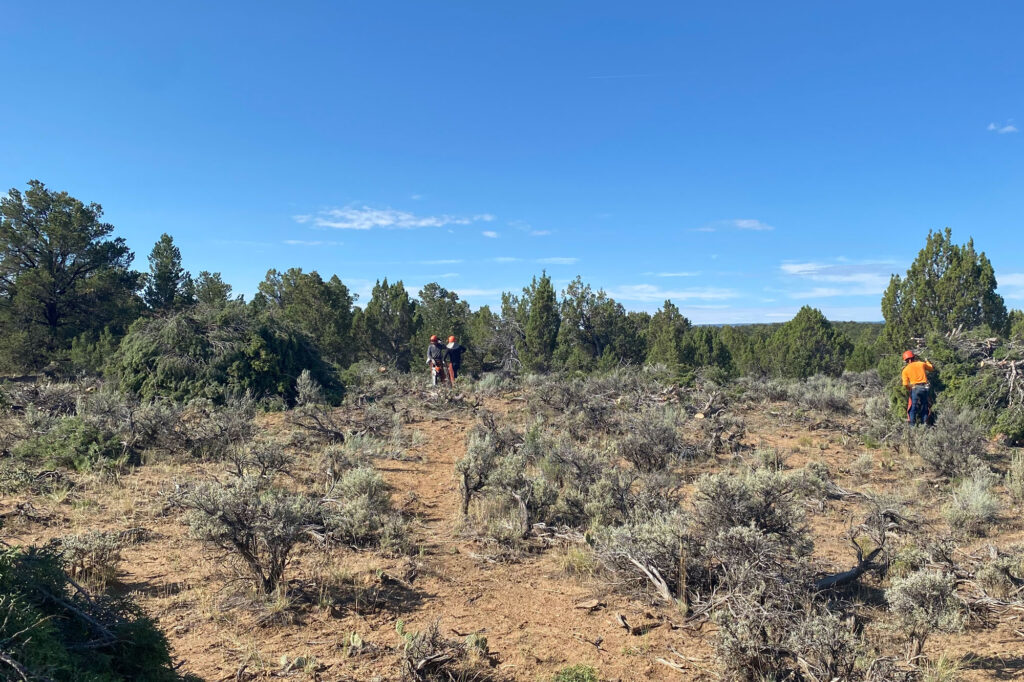
In 2017, The Hartman Divide Mastication Treatment near Radium demonstrated the partnership’s ability to operate at landscape scale. In treating 826 acres with hydro-axe machines to mulch encroaching pinyon-juniper, this project brought together an impressive coalition that included MDF, Colorado Parks & Wildlife, and four additional wildlife conservation organizations. The collaborative funding approach allowed contractors to work efficiently across large treatment units, dramatically improving sagebrush habitat for big game.
More recently, the 2023-2024 period saw the partnership operate at its prime with multiple completed projects totaling 2,099 acres. The Hog Lot project’s 140 acres of mastication near Meeker built on previous BLM and Colorado Parks & Wildlife treatments, creating a larger, more functional landscape for wildlife. The River Common Habitat Treatment restored 256 acres of sagebrush and mountain shrub communities using MDF’s problem-solving approach and contractor flexibility.
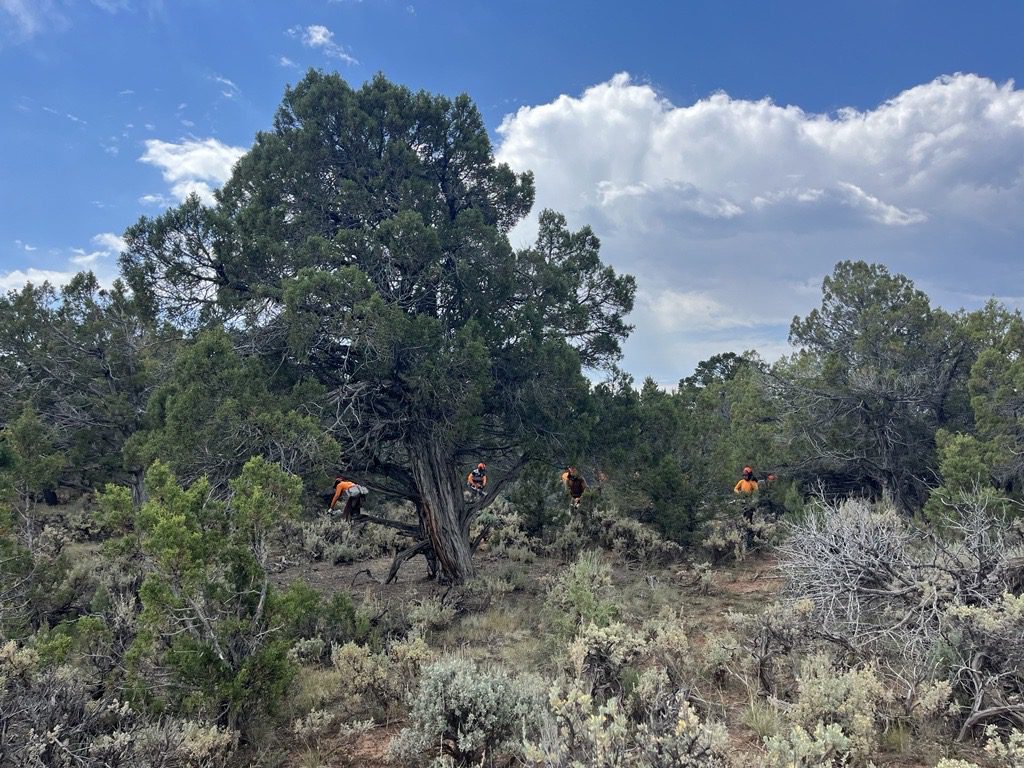
The agreement’s approach reflected proactive project planning which ensured future treatments could proceed efficiently while improving recreation management, reducing wildfire risks, and strengthening forest and sagebrush steppe health. Foresight allowed this partnership to expand into post-fire recovery efforts, applying targeted treatments to burn areas in key wildlife habitat. These efforts helped control invasive species and prepared sites for native vegetation restoration.
Across the 10,050 total acres treated, these projects share common threads: strategic habitat improvement for mule deer and other wildlife, hazardous fuels reduction to protect rural communities, efficient use of public and private dollars, and local contractor support that builds rural economies. Each project added to the impact this long-term stewardship agreements delivered through long-lasting conservation results.
A Wider Partnership Formed
The partnership’s financial leverage demonstrates the multiplier effect of collaborative conservation. During the 2016-2017 reporting period alone, MDF and partner organizations contributed 58% of total project funding, stretching federal dollars significantly further. This pattern continued throughout the agreement’s tenure, with Colorado Parks and Wildlife, energy companies operating in the Piceance Basin, the National Fish and Wildlife Foundation, and MDF’s local member chapter in Rifle all stepping forward as funding partners across various years. These diverse funding streams created a conservation engine capable of tackling projects that would have been impossible for any single entity to accomplish alone.
More Than Just an Agreement
The partnership between Colorado BLM personnel and MDF staff represents more than just an agreement. What began as an experimental pilot has proven that long-term agreements provide the stability, flexibility, and local decision-making authority needed for effective landscape-scale conservation. BLM field offices now have a tested framework for partnering with MDF and other conservation organizations on complex, multi-year habitat restoration efforts.
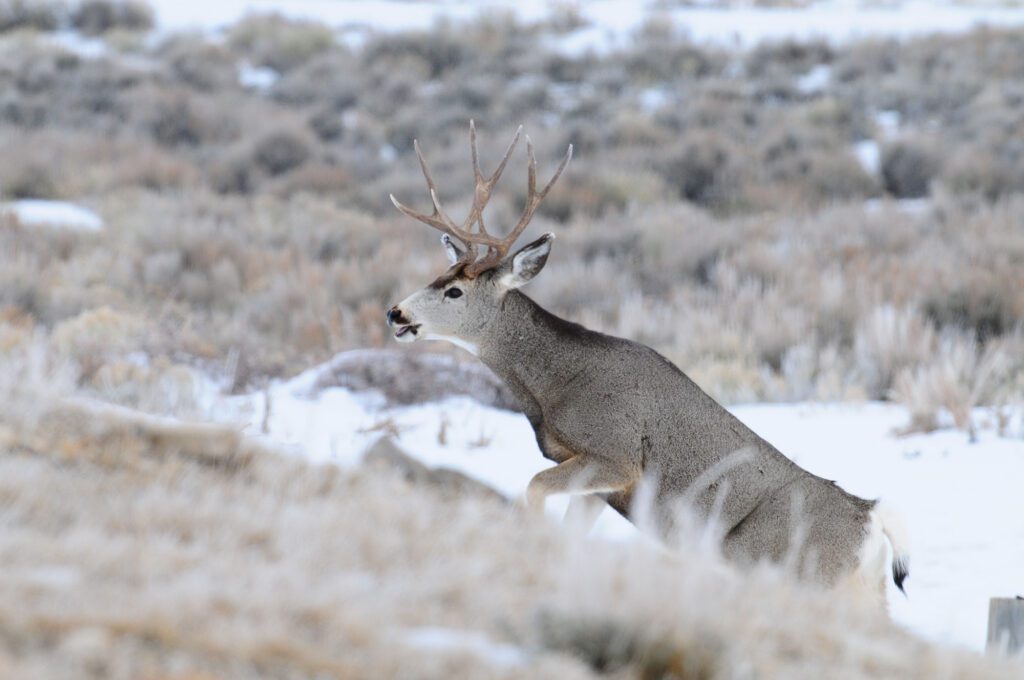
As Colorado’s mule deer populations have faced declines due to drought, severe winters, and ongoing habitat loss, this partnership has been timely. Northwest Colorado has been known as the “mule deer factory,” hosting the largest mule deer herds in North America and more mule deer hunters than any other state. This agreement provides a roadmap for ongoing recovery and growth for these populations.
Looking ahead to the next decade, this partnership stands as a model for how conservation can be accomplished across the West: through sustained relationships, flexible funding mechanisms, diverse partnerships spanning state agencies to energy companies, and above all, a shared commitment to the landscapes and wildlife that define each state’s natural heritage. The success the BLM and MDF found over the last decade belongs to the state of Colorado, in restored forests and sagebrush steppes that wildlife rely on and the rural communities that will continue to steward this landscape.
The Bureau of Land Management and the Mule Deer Foundation celebrated this decade of successful partnership in Colorado by renewing this landmark statewide stewardship agreement. This continual collaboration and coordination will help safeguard Colorado’s most iconic wildlife species and landscapes for the next decade.
Our new Dual Membership includes Annual Membership benefits for both the Mule Deer Foundation (MDF) and the Blacktail Deer Foundation (BDF) uniting two organizations with a shared mission to ensure healthy herds and thriving habitats across the West and beyond.

