


Combating Cheatgrass to Support Mule Deer on Colorado’s Eastern Plains
By: Karina Puikkonen
From the southern Rocky Mountains, a grassland ecosystem stretching east and south across large swaths of six states encompasses much of eastern mule deer range; an area commonly known as the Southern Great Plains. This region has supported both livestock and wildlife together over the last few hundred years, but cheatgrass, an invasive weed, has increasingly terrorized the precarious balance in grasslands considered to be one of the most threatened biomes in the world.
Colorado is one of the primary states the Mule Deer Foundation (MDF) has focused habitat and restoration efforts in because the entire state contains critical mule deer habitat. In light of research published this spring, which showed that mule deer avoid areas where cheatgrass exceeds 20% ground cover, MDF is proud to have supported more than 8,800 acres of targeted cheatgrass removal treatments across Colorado’s Eastern Plains since 2024. This collaborative work has been part of a large partnership with the National Fish and Wildlife Foundation, Bass Pro Shops and Cabela’s Outdoor Fund, Envu Range & Pasture, U.S. Fish and Wildlife Service, Colorado Parks and Wildlife, and local conservation districts.
“This has very much been a joint effort among partners,” Casey Nordine, MDF’s Habitat Partnership Coordinator, said. “Given that the Mule Deer Foundation contributes to conservation efforts in all 10 Great Plains states, we rely on our public and private land partners to bring habitat projects to the table that MDF can help support, fund, or lead as needed.”
Because most land in the Southern Great Plains is privately owned, these conservation efforts relied heavily on the stewardship of ranchers and farmers. As additional partners, these private landowners have promoted native vegetation growth that enhances habitat for mule deer, boosts livestock grazing productivity, and reduces wildfire risk on private and public lands alike. By conserving mule deer habitat, we can keep the vast grasslands and rangelands that agricultural producers and many kinds of wildlife call home.
Protecting Native Plant Diversity and Abundance
Cheatgrass is an invasive plant that thrives in areas of disturbance. Rural and urban development and agricultural operations can create conditions in which cheatgrass can establish and spread. If left unchecked, this plant creates a slew of problems.
When cheatgrass becomes prevalent and spreads across rangelands, it primarily outcompetes native vegetation that mule deer, pronghorn, greater prairie-chickens and other wildlife species rely on for a diverse array of high-quality food and cover. Colorado’s Eastern Plains should be comprised of mixed native grasses and sand sagebrush shrubs that are well-adapted to the semi-arid conditions. Sand sagebrush stabilizes the light, sandy soils and provides shelter and shade for grasses and flowering plants, all of which are crucial for grassland birds, big game, and livestock. This plant diversity must be protected before cheatgrass takes hold.
“These expansive plains are full of biodiversity, and we want to maintain that by keeping native grasslands as native grasslands,” said Nordine.
Cheatgrass Increases Wildfire Risk
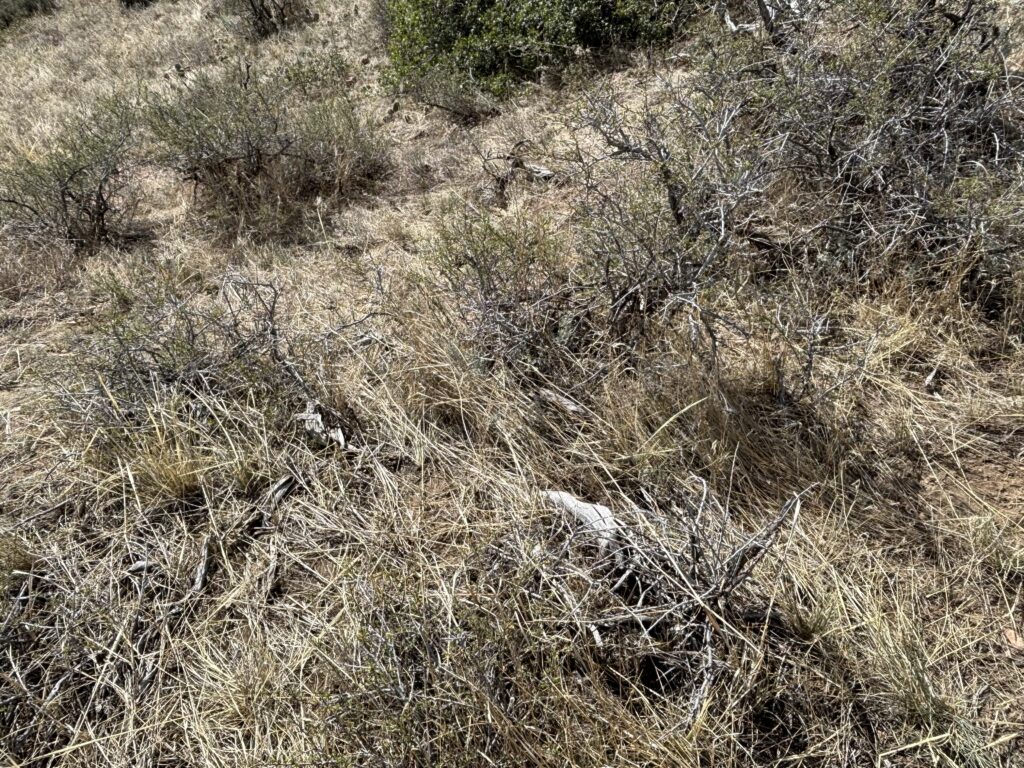
Cheatgrass is particularly successful because it has a differently timed life cycle than most native vegetation. It germinates in the fall and establishes roots months before native plants begin growing. In early spring, cheatgrass sprouts aggressively, absorbing available soil moisture and nutrients before other plants can use these resources. By early summer, cheatgrass has already flowered and produced thousands of seeds that are stored in the soil. It then dries out creating yet, another problem.
As an annual plant, cheatgrass turns brown by early summer and forms a dense layer of fine and highly flammable fuel. Most native perennial grasses and shrubs remain green long into the growing season and don’t create the same fuel load. Wildfires in areas with high cheatgrass prevalence burn hot and fast, which can destroy sagebrush communities that take decades to grow to maturity. Cheatgrass seeds can survive for years, making them the first to rapidly recolonize burned areas, giving this plant a competitive edge across the Great Plains. No wonder there is a large focus to remove this invasive weed and reduce its ability to spread across public and private lands.
An Effective and Efficient Partnership
This Southern Great Plains partnership in Colorado has focused many of its efforts on Yuma County in the northeast corner of the state. While large portions of land have been converted to irrigated cropland, intact rangelands that provide wildlife habitat still make up much of the west-central and southwest portions of the county, making this landscape a patchwork of possibilities for conservation work.
“Landowners have a desire to improve these landscapes and their working lands,” Nordine said. “They have seen the amount of cheatgrass increase over the years and are perfect partners because our goals align. They want to optimize the utilization and health of their pastures for livestock grazing, while also doing what’s best for wildlife. They know both goals are compromised by the invasion of cheatgrass.”
While public land projects are often conducted within one land agency’s boundary, this effort was unique in that a single identified treatment could involve several different landowners. Some projects fell primarily on private lands, while others were conducted across property lines by treating both state wildlife areas and neighboring ranches in a landscape-scale approach.
“We always want to be additive,” Nordine said. “We ask how we can get the most acres treated in the most efficient way for the greatest impact, and sometimes that means playing Tetris with the various moving parts that it takes to get a project across the finish line. This collaborative conservation outlook helps ensure that we are prioritizing and improving these valuable working lands at a scale that has real impact.”
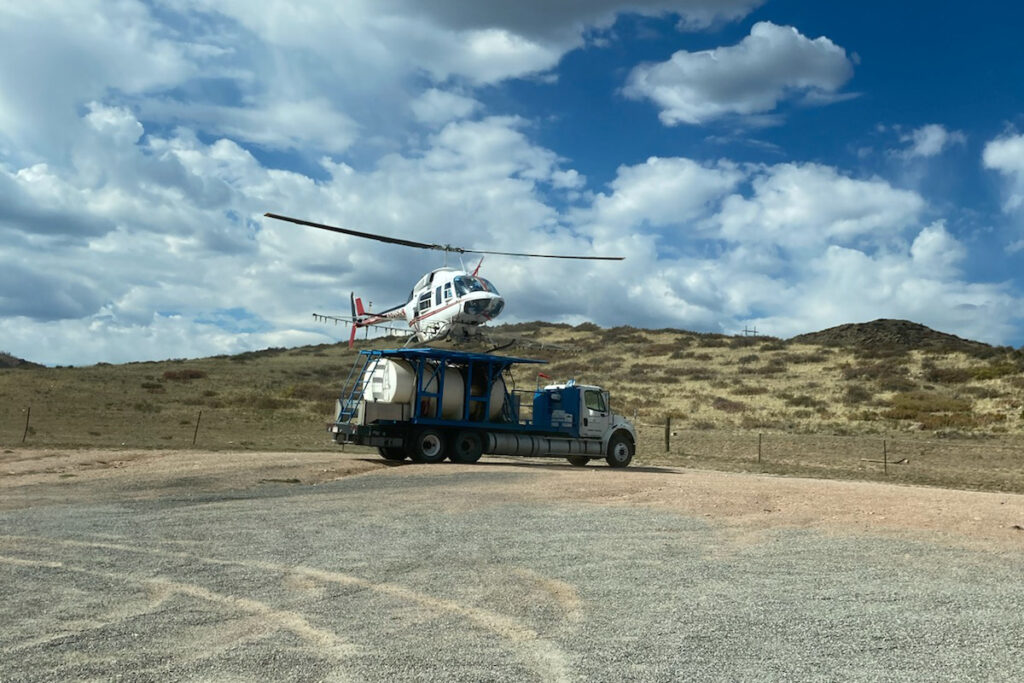
The more than 8,800 acres treated thus far across multiple properties and multiple projects have used an effective product. Aerial applications of Rejuvera, an herbicide that targets cheatgrass, were done through collaborative planning, shared funding, and coordinated implementation among the public and private partners. Rejuvera is a pre-emergent herbicide that doesn’t kill living vegetation. Instead, cheatgrass plants absorb the herbicide which kills seeds shortly after germination, so they never become established plants that can produce massive seedbanks. This treatment can be effective at controlling cheatgrass for up to five years, giving time for native perennial grasses and forbs to re-establish and expand back into the treated areass
By reducing cheatgrass, this multi-year effort has promoted the resurgence of native vegetation on Colorado’s Eastern Plains. No matter the motivation for each partner, the result has achieved everyone’s goals by improving livestock grazing lands and wildlife habitat. This is a critical step towards healthier ecosystems, stronger wildlife populations, and sustainable livelihoods in this corner of the Southern Great Plains region.


