


Many Hands, Two Guzzlers: Nevada Volunteers Build Lifelines for Mule Deer
By: Karina Puikkonen
In Nevada, water is life for wildlife, and for residents, wildlife are an important part of their lives.
As the driest state in the nation, reliable water sources can determine where mule deer and countless other wildlife species survive, particularly during long, hot summers. That’s why wildlife guzzlers, rain and snow melt collection systems designed to provide dependable water in remote landscapes, have become an essential conservation tool across the Silver State.
This summer, volunteers and members from the Mule Deer Foundation (MDF) joined the Nevada Department of Wildlife (NDOW) and other like-minded organizations to help construct not one, but two wildlife guzzlers in eastern Nevada. While separated by miles and completed during different volunteer events, both projects shared the same goal: improving habitat for mule deer while bringing together people who care deeply about Nevada’s wildlife.
Providing Water in the Schell Creek Range
On a remote stretch of Bureau of Land Management land roughly 50 miles south of Ely, MDF members joined more than 30 volunteers, NDOW, and other conservation partners to construct a new wildlife guzzler in the Schell Creek Range.
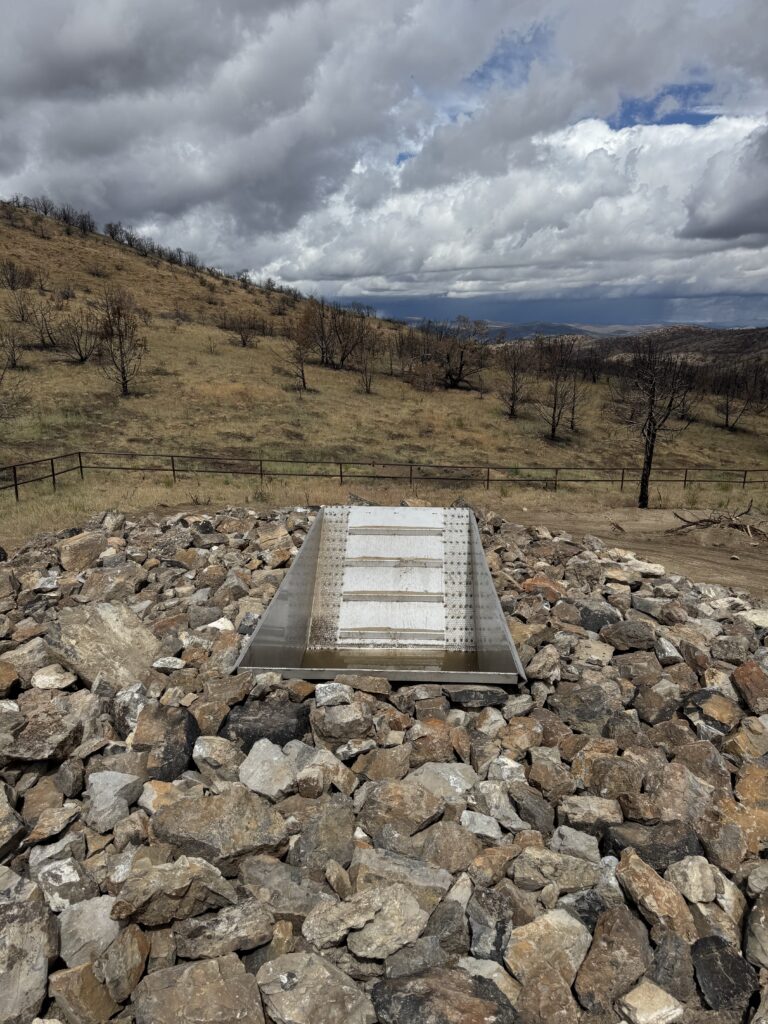
The guzzler, complete with an underground storage tank, rain-collecting apron, skirt, and protective railing, will help meet the water needs of mule deer in a priority area identified through the Nevada Mule Deer Enhancement Plan and NDOW’s habitat priorities. The project brought together an impressive coalition of partners, including NDOW, MDF, Meadow Valley Wildlife Unlimited, Wildlife Habitat Improvement of Nevada, and the Fraternity of the Desert Bighorn.
For longtime MDF member and Great Basin Chapter committee member Mark Malloy, projects like this are exactly why volunteers dedicate countless hours raising funds to support local conservation.
“It’s an opportunity to give more than your membership fee,” Malloy said. “People want to get out on the ground and actually help. At the end of the day, you can look back and see something you built that’s going to benefit wildlife for years.”
The Great Basin Chapter in Elko has become one of MDF’s most successful chapters nationwide, consistently leading the organization in fundraising. Members take pride in seeing those dollars return to meaningful habitat work. Although this project was several hours south of Elko, many chapter members had hunted the area before and understood the need.
“Everyone who comes to our banquets wants to know where the money is going,” Malloy said. “This gave us the chance to support a project that fills an important need, even if it wasn’t right in our backyard.”
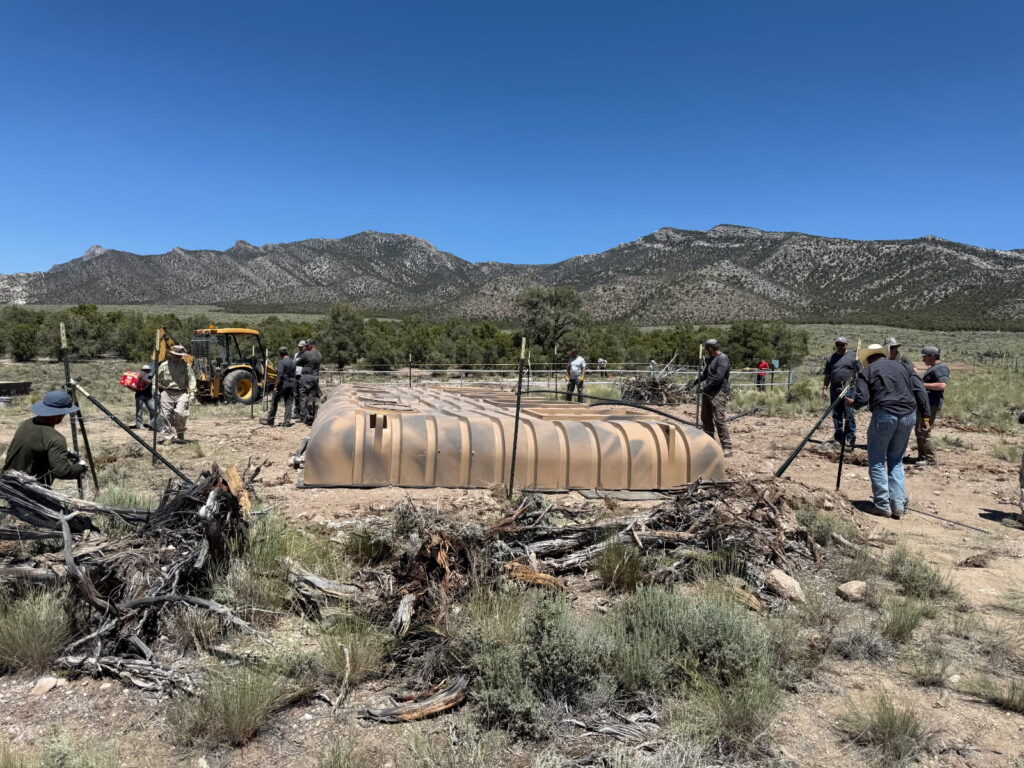
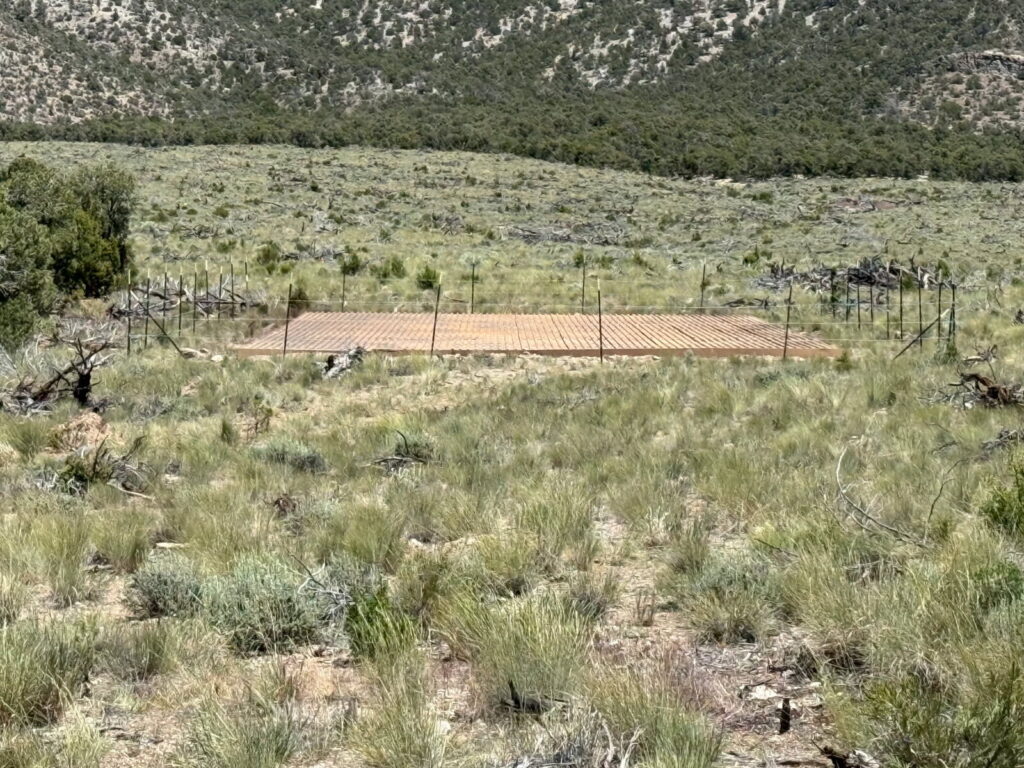
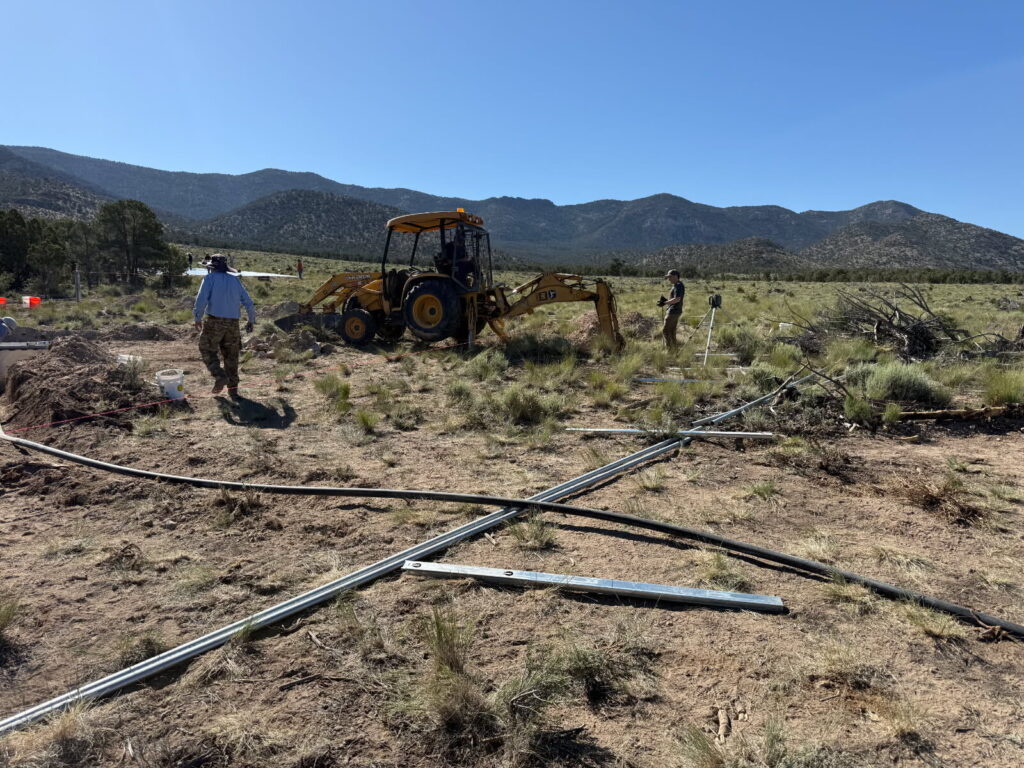
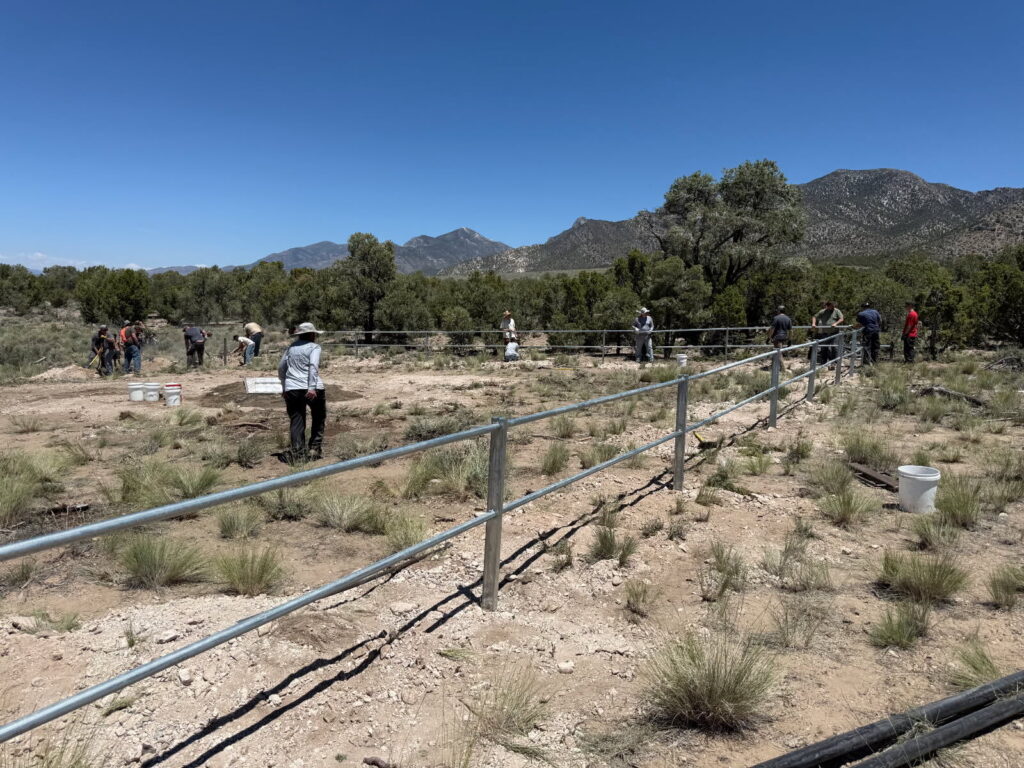
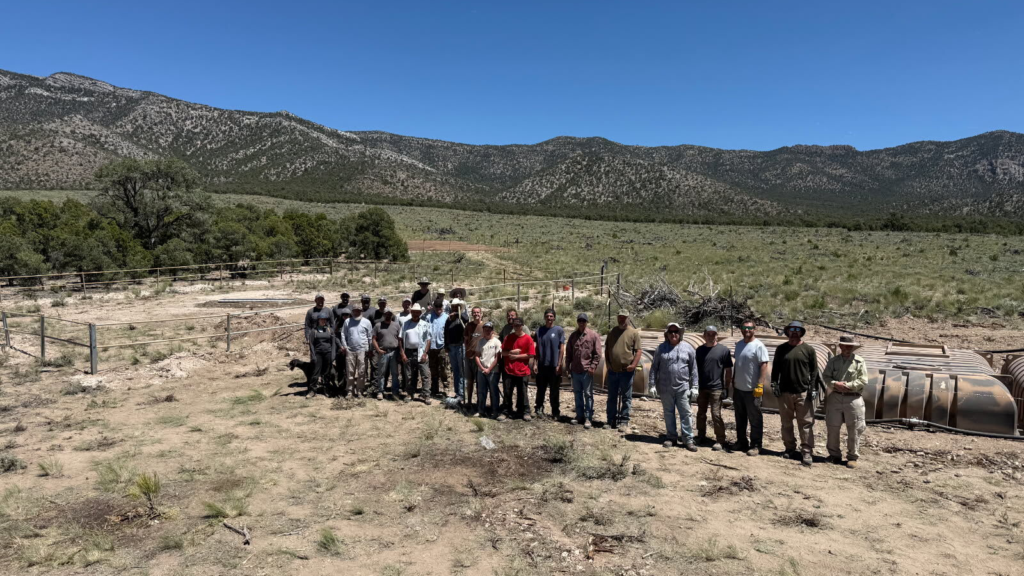
Photos courtesy of Mark Malloy
Inspiring the Next Generation
Wildlife projects like these are about more than habitat, they’re about people. For 13-year-old Lyla Scott, Malloy’s niece’s daughter as well as the youngest volunteer on the project, the guzzler build was both a family outing and an opportunity to make a difference.
“I was helping dig holes for the fence and got to paint it with a mop,” she said. “It was hard work, but I was with my family, we were listening to music, and we even had competitions to see who could finish first.”
Seeing the finished project left a lasting impression. Lyla hopes to become a veterinarian one day, and experiences like this are already shaping her commitment to conservation.
“If I start helping animals now, it’ll help me in the future,” Lyla said. “We have to keep wildlife healthy and safe, and it was fun. We were talking, making new friends, and everyone was having a good time.”
NDOW allowed Malloy’s family to name the guzzler in honor of family member, Georgene Proutsos-Malloy’s parents, John and Judy Proutsos, who taught her to appreciate and value the landscapes in which they grew up and still live in.
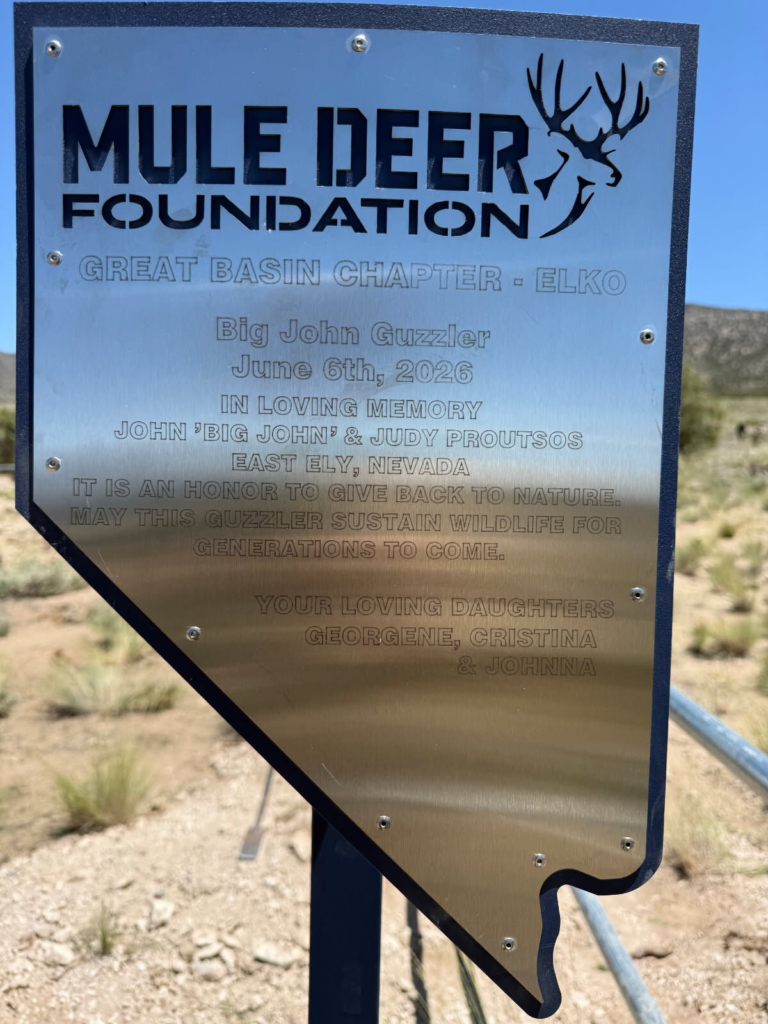
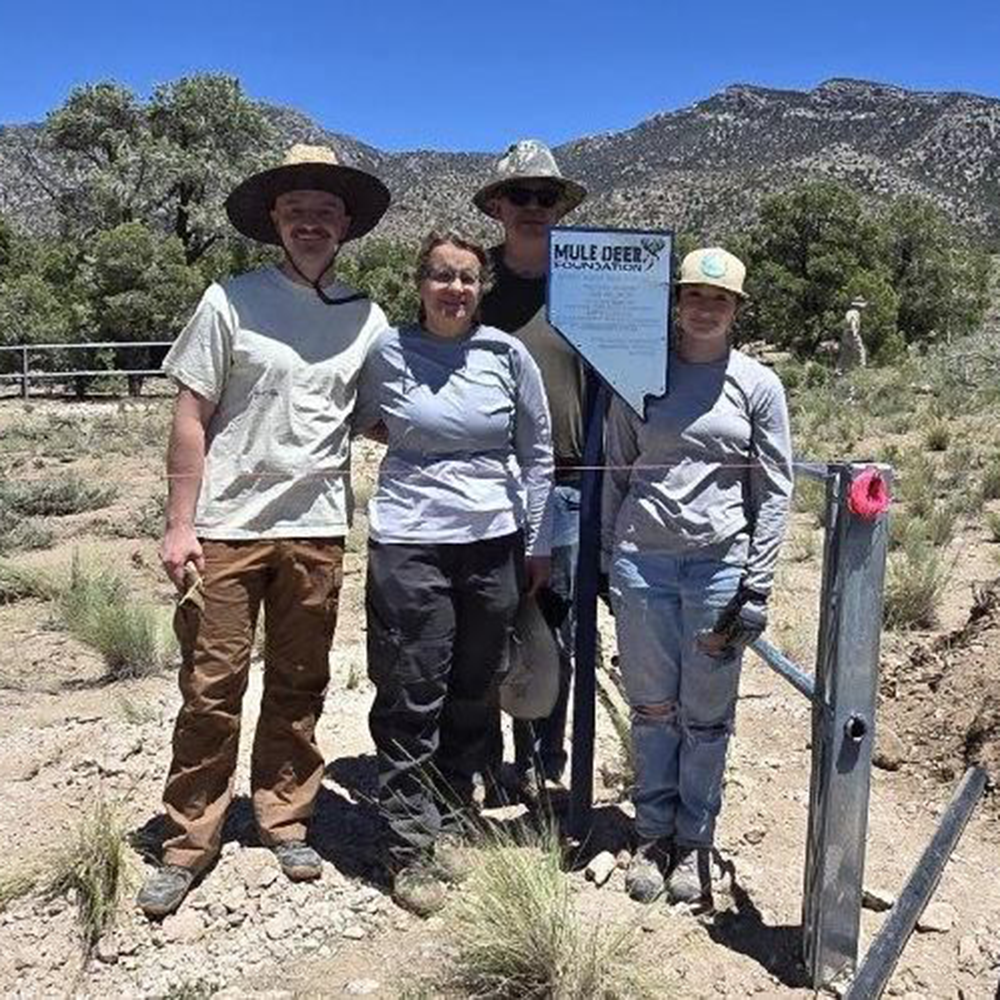
Guzzler sign in honor of John and Judy Proutsos
From Left: Family members Dalton Turner, Georgene Proutsos-Malloy, Mark Malloy, Lyla Scott
Photos courtesy of Mark Malloy
A Second Guzzler, A Shared Purpose
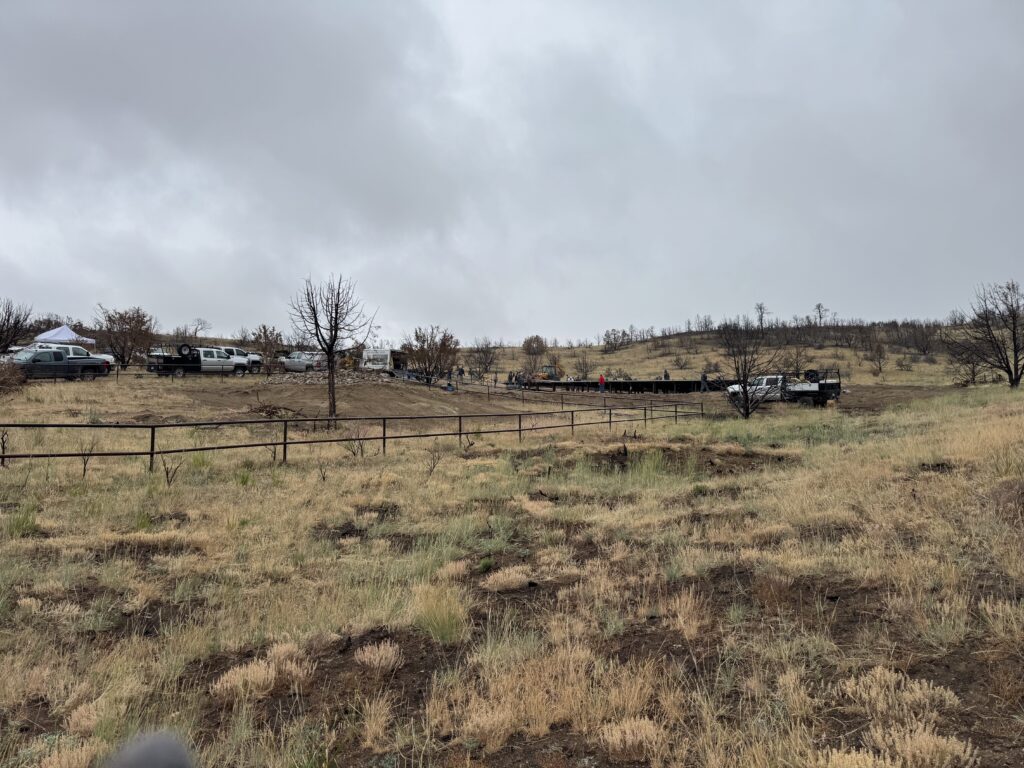
Just weeks later, another group of more than 70 volunteers with NDOW, Nevada Bighorns Unlimited, Elko Bighorns Unlimited, NDOW, MDF, and other conservation organizations gathered to rebuild a wildlife guzzler that had been destroyed by wildfire in eastern Nevada. Amongst them was Richard Sudweeks, MDF’s new Nevada State Chair. Getting involved in conservation isn’t just about wildlife for Sudweeks, it’s about preserving a way of life.
“It’s time for me to give back since I love to hunt, and start giving back to the wildlife,” he said. “I remember seeing hundreds of deer in a day, now you’re lucky to see a dozen. Get involved so we don’t lose all of this.”
Born in Ely and a lifelong Nevada resident, Richard has spent decades hunting and exploring the state’s mountains. Those experiences motivated him to become more involved with MDF after encouragement from longtime friend and MDF Regional Director Chris Crabtree. Upon becoming State Chair and having participated in many fundraising and social events, this was his first conservation project.
“I want these opportunities to still be here for my kids and someday my grandkids,” Sudweeks said.
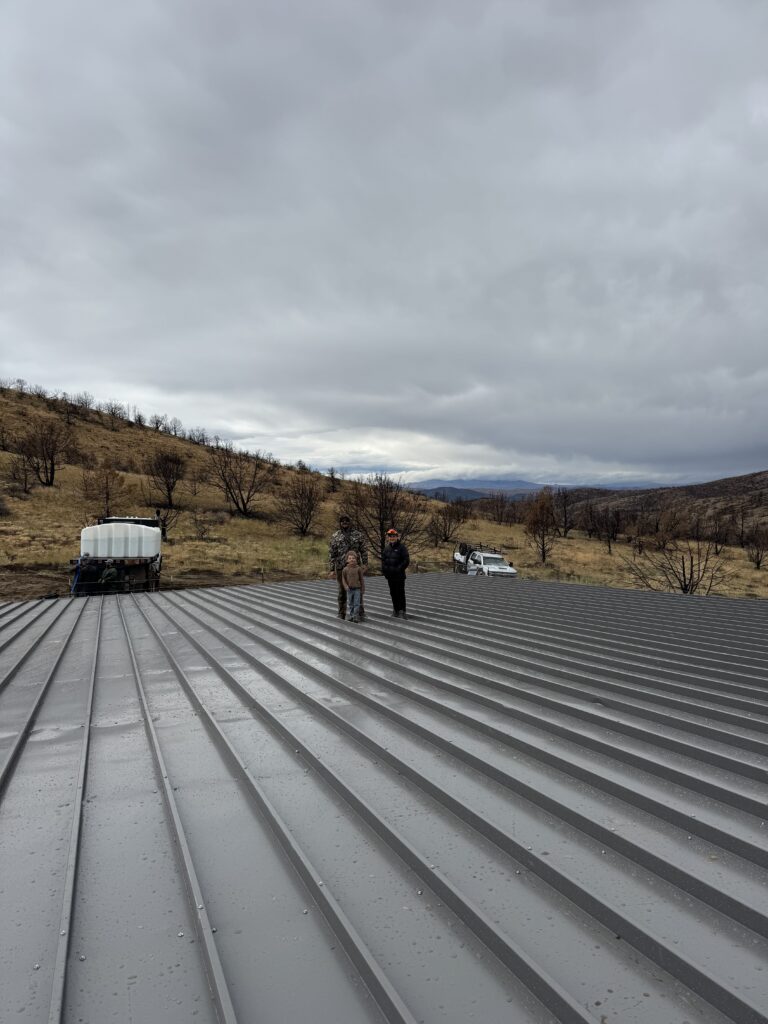
Richard brought along his nearly 12-year-old son, Emmett, making it their first guzzler build together. They helped install support posts, assemble the rain-catching apron, secure roofing panels, build protective fencing, and complete the finishing work around the drinker. Despite beginning the day with a soaking rainstorm, no one complained.
“It was a blast,” Sudweeks said. “If you were really old or really young, or whatever your capabilities were, there was something for everyone to do.”
For Emmett, the purpose was simple.
“It helps the animals have water to drink,” he said. “If they can’t find anywhere else, they can find the guzzler. It was really fun, and I got to build something that wasn’t Legos.”
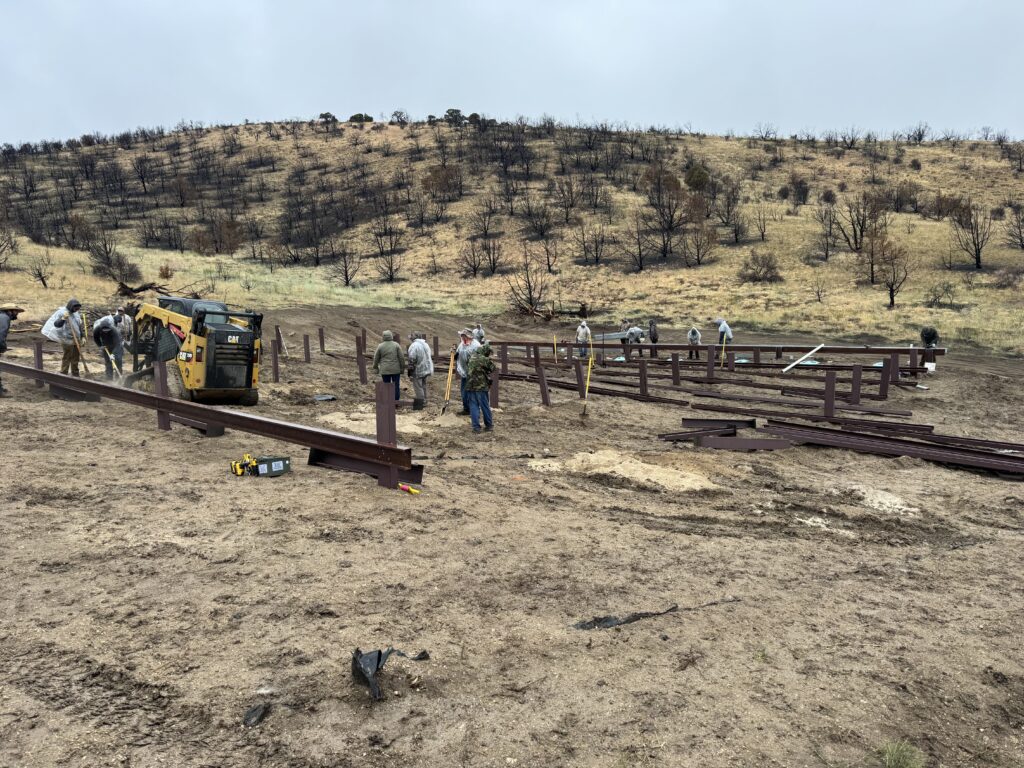
Photos courtesy of Richard Sudweeks
Why Water Matters
Both guzzler projects address one of Nevada’s greatest wildlife challenges. Across much of the state, dependable natural water sources can be hard to find. Mule deer generally stay within a couple of miles of reliable water because traveling farther uses valuable energy, particularly during dry summers when nutritious forage is limited.
Water developments like these help fill critical gaps while benefiting much more than mule deer. Elk, pronghorn, upland birds, small mammals, reptiles, and countless other wildlife species also rely on these dependable sources.
“What we’re doing is helping our deer and elk,” Sudweeks said. “The funding is used where it needs to be used to help mule deer, anywhere regardless.”
Wildlife guzzlers are becoming increasingly important as Nevada’s landscapes face prolonged drought, invasive annual grasses like cheatgrass, pinyon-juniper expansion, and large wildfires that can permanently alter sagebrush ecosystems and migration corridors.
Conservation Happens Together
For both Malloy and Sudweeks, the projects demonstrated something just as important: that conservation succeeds through partnerships. Government wildlife agencies provide expertise and planning. Nonprofit organizations help raise funding. Conservation organizations and volunteers contribute critical time in hours of labor. Together, those collective efforts accomplish projects that no single organization could complete alone.
“It’s satisfying to see so many groups working together,” Malloy said. “Government agencies can’t do it all themselves. Conservation organizations bring funding, volunteers, and partnerships that allow more projects to happen and help wildlife across much larger landscapes.”
Sudweeks felt the same.
“I want to see more projects like this,” he said. “When volunteers, nonprofits, and wildlife agencies work together, we can accomplish so much more.”
Perhaps that’s the greatest value of a guzzler build. Volunteers leave with more than sore muscles or dusty boots. They gain a sense of ownership and camaraderie, knowing their work will provide water for wildlife in the years to come. For the Mule Deer Foundation, that’s what conservation is all about: bringing people together to improve habitat today while ensuring future generations can experience healthy mule deer herds, thriving landscapes, and the traditions that connect them to the outdoors.


