


Bolstering a Partnership in the Uinta Mountain Range
MDF and Local Landowners Help a Proactive Landscape-Scale Effort in Utah Advance Multiple Conservation Goals
By: Karina Puikkonen
Animals have always been central to Laree Perez’s life. Raised on a large family sheep and cattle ranch in New Mexico, she has continued to raise dogs, miniature donkeys, and horses throughout her life. When the Southwest heat became too much for her animals, an acquaintance suggested northern Utah.
After moving to Park City, Utah, several years ago, Perez began searching for land where her animals could spend the summers. In 2021, she found 450 acres along the Mirror Lake Scenic Byway, named the most beautiful road in the U.S. by FLBR Motorsport this year. The parcel was within a rural community surrounded by the Uinta–Wasatch–Cache National Forest. Mill City Creek runs through the property, providing water, food, shelter, and security for Perez’s animals and surrounding wildlife. She named the property “Little Bear.”
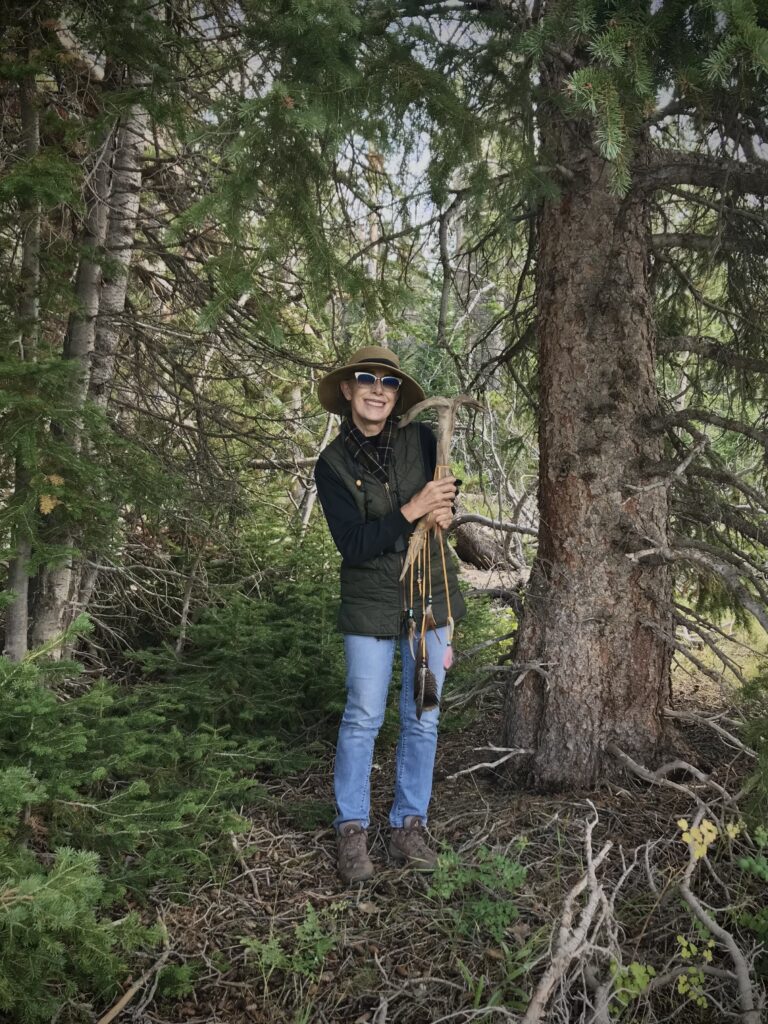
“Little Bear is one of the most beautiful pieces of land; it’s every animal’s dream, whether domesticated or wild,” Perez says. “It was just land, and I wanted to keep it that way.”
But amidst this natural beauty, Little Bear faced a serious challenge.
“The deadfall was so thick in areas that you couldn’t safely walk through it on foot or a horse because you could break a leg,” she says. “I needed to get the dead wood off the land.”
Little did she know that decision would draw her into one of the Mule Deer Foundation’s (MDF) largest habitat efforts to date. For the last several years, MDF has partnered with the U.S. Department of Agriculture, Forest Service and Utah’s Watershed Restoration Initiative (WRI) on the Bear River Watershed Resilience Project that encompasses the 36,000-acre Bear River Watershed. This watershed provides natural resources for critical wildlife habitat and communities near and far.
Becoming Part of the Solution
Perez was one of the first landowners to become a private partner on this project. One of Little Bear’s property boundaries borders the national forest, which she knew also has a dead wood problem. Her goal to remove dead and downed wood aligned directly with the Forest Service’s goal to reduce wildfire risk for communities in the area and MDF’s goal to improve mule deer habitat that can support all wildlife.
“In some places, the national forest floor is a mess of fallen lodgepole pine. It’s like a giant game of pick-up sticks, and in others it’s lined with bid dead spruce,” says Tyler Meservy, MDF’s habitat partnership coordinator in Utah. “With so many mule deer using this forest, a severe wildfire could impact entire herds and nearby communities.”
Removing a landscape full of dead wood needed agencies, communities, and conservation partners to unite around a shared vision for creating resilient forests and better wildlife habitat. By working with Utah’s Department of Natural Resources (DNR) and the Forest Service across public and private boundaries, MDF is helping to restore a landscape that can support larger and stronger deer herds. For the Forest Service, resilient forests better protect local, rural communities from devastating wildfires, while private landowners participate in wildfire mitigation and help DNR safeguard an important watershed.
A Fire-Prone Landscape
The Uinta Mountains run east to west along Utah’s eastern corner, and contain some of the state’s most valued forests, lakes, and wildlife habitat. For generations, the mixed aspen-conifer forests surrounding the north-south Mirror Lake Highway and east-west North Slope Road have provided important summer and transitional range for mule deer while supporting the needs of recreation, hunting, and rural communities.
Forest conditions along these two access corridors have received more attention from state and federal agencies in recent years. For more than a century, fire suppression has altered these forests to a point where dense conifer stands have now crowded out aspen regeneration and understory vegetation, creating heavy fuel loads. While many forests around the West have burned, the UWC National Forest has largely been spared thus far.
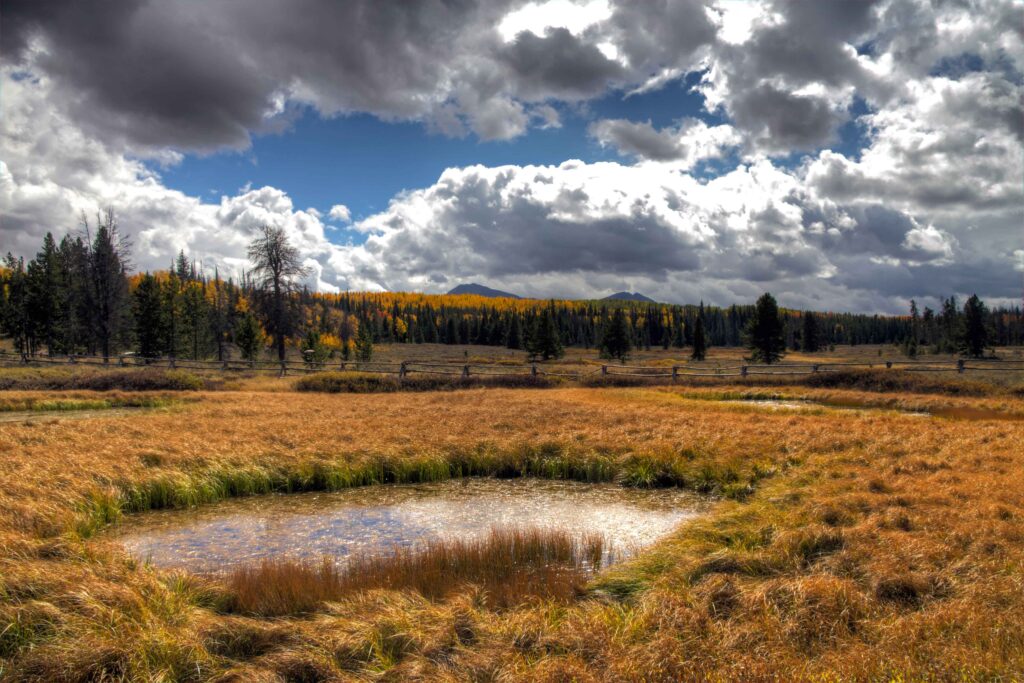
“High Uinta forests have weathered this threat better than other forests because of unique weather patterns that bring seasonal monsoons during a time that other areas of northern Utah are dry,” says Riley Bergseng, Deputy Fire Staff Officer – Fuels for the UWC National Forest. “The area also typically has a fire season ending storm by late September or Early October.”
Adding to the problem, a mountain pine and spruce beetle epidemic between 2006 and 2015 (that affected much of the entire Rocky Mountain region) killed much of the forest’s lodgepole pine and Engelmann spruce, leaving extensive dead timber across the landscape. These dead trees have dramatically increased the wildfire threat.
“As the standing trees begin to fall and new vegetation grows, it compounds the fuel build up on the ground and creates conditions for fire to spread faster and hotter,” Bergseng cautions. “There are multiple cabin communities and businesses that operate within and along the national forest. Many of these areas are now at higher risk of being impacted by fire.”
That risk became evident when the Beulah Fire ignited in August 2025, with conditions primed for devastating fire. Although nearly 50,000 acres of heavy forest fuels surrounded the blaze and forced evacuations for cabin communities along the Bera River and Mill Creek drainages, previously completed forest treatments from the Bear River Watershed Resilience Project provided valuable contingency lines that supported firefighters. By the time the annual snows arrived, just 5,700 acres had burned.
The Beulah Fire made one thing very clear for this project: MDF and the Forest Service are working in the right place, at the right scale, and at the right time to protect these local communities and wildlife.
Partnerships Expand the Conservation Reach
Long before the Beulah Fire and even the beetle epidemic, public land and wildlife managers saw how wildfires began affecting larger areas and understood that forest and wildlife management also needed to work on this landscape scale. Utah’s Watershed Restoration Initiative began in 2006 with the understanding that partnerships across boundaries would be critical to making this type of effort possible.
MDF’s long-term partnership with the Forest Service became a critical piece of the partnership pie. As a keystone partner since 2023, MDF has increased this federal agency’s ability to complete large-scale restoration projects across national forest lands in the West. The Forest Service’s current strategy emphasizes active forest management that can reduce wildfire risk, support rural community timber and recreation economies, and expand its own capacity through partnerships.
“The Bear River Watershed Resilience Project has since become one of our priority active management areas on the Uinta-Wasatch-Cache National Forest to reduce wildfire risk to homeowners and businesses,” Bergseng says.
These strategies naturally align with MDF’s own mission to reduce wildfire risk, improve forest health, and enhance habitat, all of which will increase deer populations.
Since 2022, MDF has been leading forest thinning and mastication projects, as the Forest Service concentrates on pile burning and timber sales. In addition to the Bear River Watershed Resilience Project, MDF has been leading the multi-year Burnt Beaver Project (also a WRI project) farther east along the North Slope Road. Together, these efforts have directly treated over 9,500 acres thus far, creating a connected landscape that is more resilient to future wildfires all along an important mule deer migration corridor.
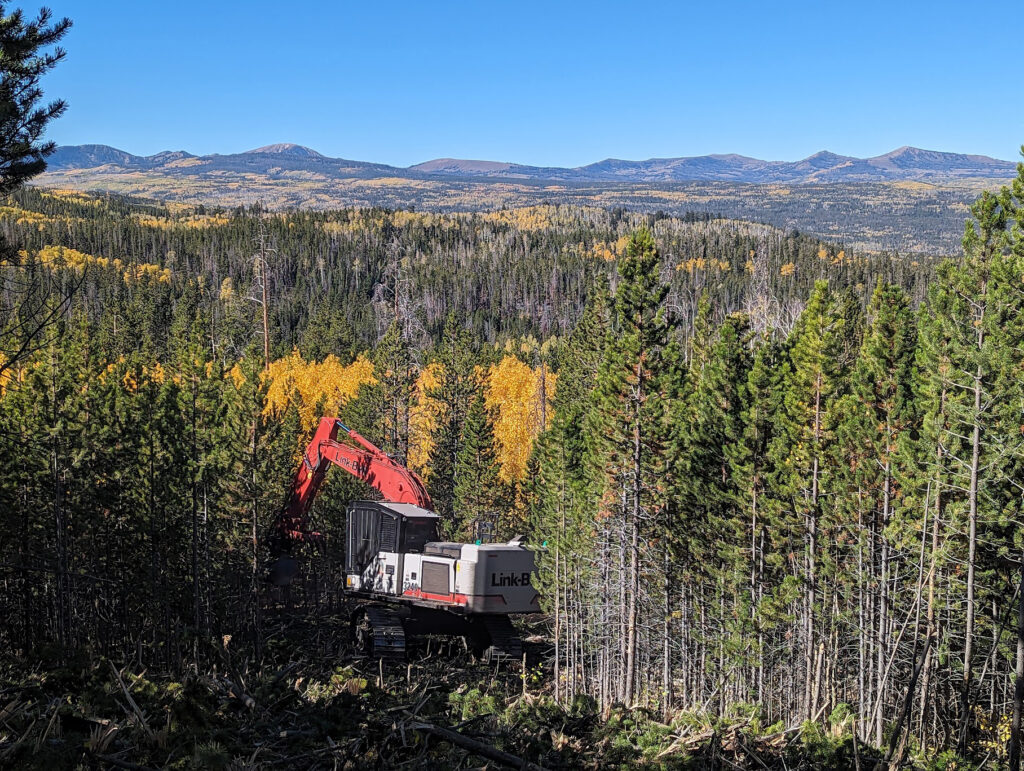
“Everything we’re doing creates defensible space around communities, but we are also working with every division of the Forest Service to ensure these projects benefit mule deer as well,” MDF’s Meservy says. “While we’re cutting down trees with the fuels team, we work with agency biologists and habitat managers to design treatments that offer mosaic openings in the forest that secures wildlife habitat on the landscape.”
Removing the dead and downed trees across the national forest has been and will continue to be a multi-year process. Nearly 3,000 acres of additional forest are ready for treatment. This is just one of many extensions planned over the next 5 to 7 years which will also include work on private lands. As one of the WRI partners that can work across ownership boundaries, MDF was ready to work with Laree Perez who became a valuable collaborator on the project.
Creating Places for Wildlife
The summer after purchasing Little Bear, Perez began removing dead wood along the southern half of the property on her own. She hired contractors to cut trees into 14 to 22-inch logs, which Perez said produced seven semi-truck loads of firewood, all given away to her community.
“I didn’t know what I was doing at that point, but I saw how this simple act started to make a difference,” Perez says. “The work was not about me; it was about preserving the integrity of the land.”
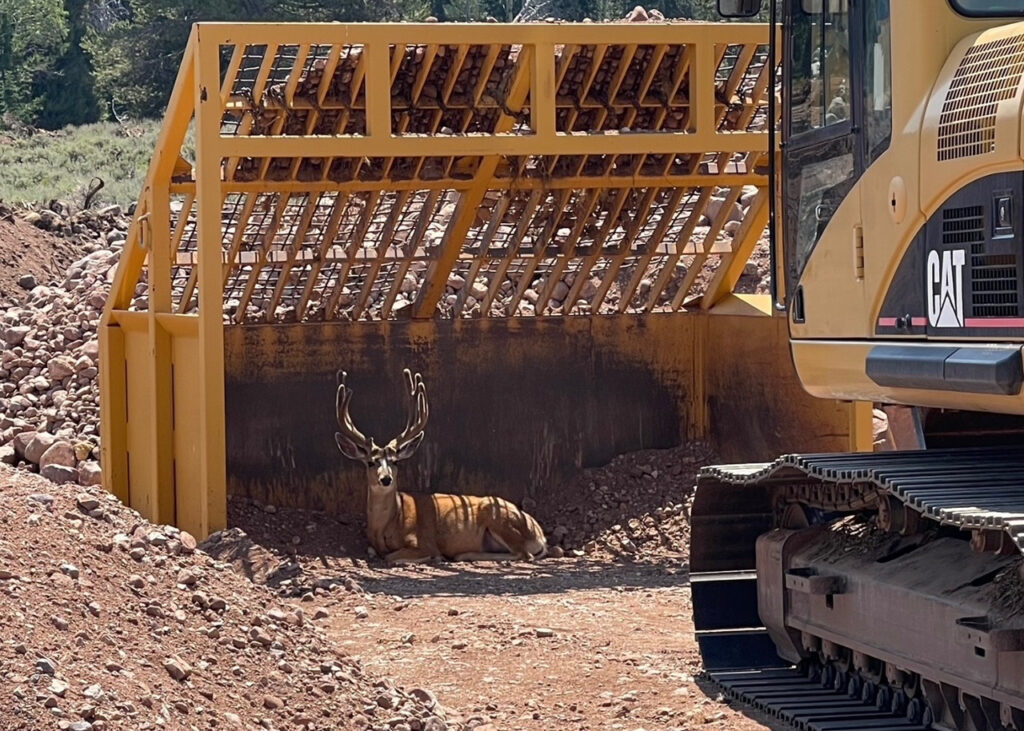
While she had seen wildlife regularly, Perez began noticing they didn’t just pass through Little Bear anymore. Some decided to stay for a while. She’s seen a large buck sleeping inside the bucket of her tractor, along with many more deer on the property. While constructing a future barn for her own animals, camera footage showed that what looked like a bag of trash was actually a moose curled up near the generator. She likes to think it’s the same bull moose she still sees hanging around the barn.
“It’s just their home,” Perez says. “I fluff their pillows, leave chocolates and make them tea (metaphorically of course). I try to make their life as good as it can be.”
After a neighbor told her about the fuels reduction work underway in the national forest, Perez reached out and MDF’s Meservy and PJ Abraham with Utah’s Forestry, Fire and State Lands responded. They invited her to join the project as a private partner, which would help remove the remaining dead wood on her property. Conversations and planning for an aggressive treatment began in the summer of 2023, and the work was completed in mid-October 2025.
“As a private landowner, I was a little scared at first. You feel like you’re relinquishing control even though you aren’t,” Perez says. “Tyler and PJ included me in the process every step of the way. Trust went both ways. I needed to trust them to do their job, and I needed to prove they could trust in me.”
Having been a businesswoman her entire life, Perez knew that everyone needed to do what they said they were going to do. When an early October snowstorm postponed a neighbor’s cattle roundup, Perez headed to Little Bear and spotted the hand-cutting crew’s truck. Thinking they might need help, she drove up the road only to find the crews hard at work despite cold, wet, and windy conditions with snowflakes “the size of softballs.” The crew told her the storm provided ideal working conditions because they didn’t have to worry about sparks from the saws.
“These were my kind of people,” Perez says. “They did what they said they would do. They did it well; they were where they needed to be, and the work exceeded my expectations. If a fire comes roaring towards Little Bear, what we’ve done can stop it.”
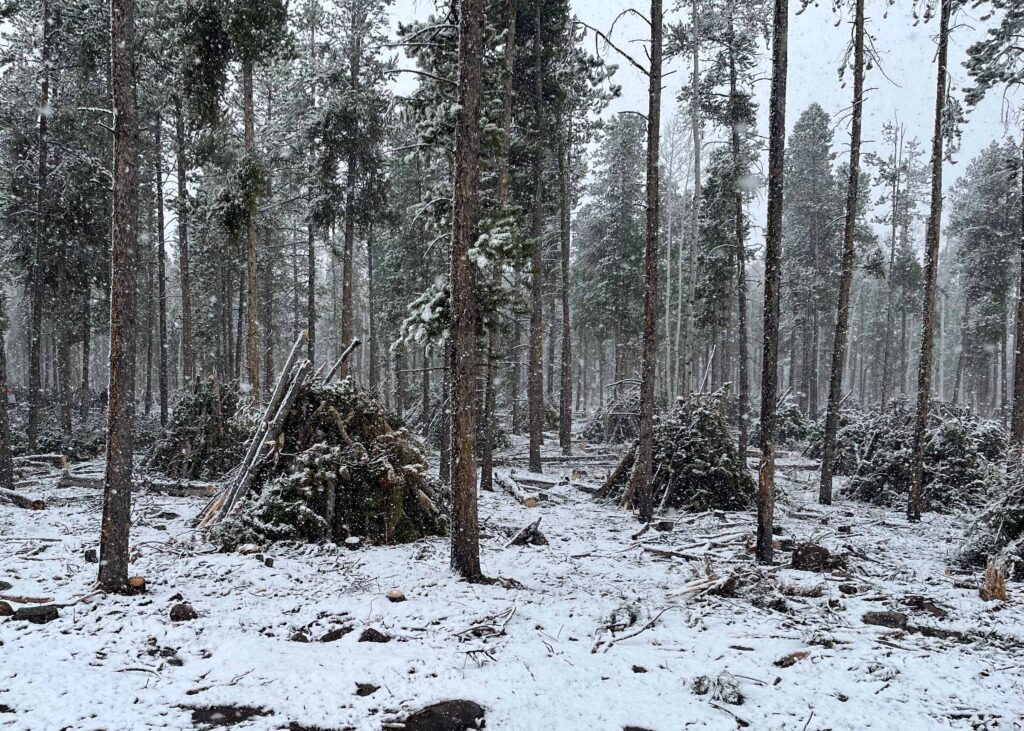
Perez and Meservy hope her experience will inspire additional landowners to participate in Utah’s Watershed Restoration Initiative and help achieve that broader goal of creating resilient forests across private lands and national forest lands.
The Bear River Watershed Resilience Project shows that conservation partnerships can achieve multiple goals at the scale the landscape demands. Through partnerships and active management, the Mule Deer Foundation is part of transforming forests impacted by beetles, drought, and wildfire risk into resilient landscapes that support mule deer and sustain a watershed that offers hunting, recreation, and lifestyle opportunities in one of Utah’s most treasured natural landscapes.
“What we accomplish today sets the stage for healthier forests tomorrow,” Meservy says. “That long-term vision guides every acre we treat, fulfilling MDF’s primary goal to improve mule deer habitat that can support all wildlife.”


