


Addressing Fragmented Landscapes: Roads, Fences, and Development
By: Karina Puikkonen
Top photo: Cervidae Peak Overpass on Idaho State Highway 21. Photo credit: Grace Bullington
When you think of mule deer, you probably picture them roaming wide-open spaces—grazing in sagebrush, climbing hills, or crossing valleys on long migrations. That freedom is part of what makes them iconic. But across the West, roads, fences, and development are breaking these landscapes into smaller, fragmented pieces.
Imagine being a mule deer traveling dozens of miles, only to face one barrier after another—busy roads, fences, and human development. Each obstacle forces you to exert extra energy just to reach food, water, or shelter. What used to be a simple route for past generations is now a dangerous challenge. For mule deer, habitat fragmentation isn’t just inconvenient—it can mean life or death.
At the Mule Deer Foundation (MDF), we work with our member chapters and outside partners to reconnect landscapes. From supporting wildlife crossings to retrofitting fences and improving habitat, MDF is helping mule deer move safely across the lands they’ve relied on for centuries.
Roads: Turning risk into safe passage
Whenever I pass a yellow, diamond-shaped sign with a deer silhouette, I know it’s time to scan the road a little more carefully. These signs aren’t decoration—they’re reminders that mule deer, especially during spring and fall migrations, are often on the move in these areas.
Today, highways and fast-moving cars overlap mule deer habitats and migration routes. Vehicle collisions kill tens of thousands of deer every year (likely an undercount) and put drivers at serious risk as well. Beyond fatalities, the constant noise and danger of traffic can stress deer and push them away from critical habitat, further straining their survival.
Fortunately, solutions are starting to appear on roads across the West in the form of wildlife overpasses, underpasses, and roadside fencing along key migration corridors. Building these large structures requires extensive collaboration and funding at the federal and state level. MDF and its member chapters support these large-scale projects however we can.
- Wildlife Crossing in California: MDF’s Shasta/Lassen Member Chapter raised money this year to purchase trail cameras that help the California Department of Transportation and California Department of Fish and Wildlife study and monitor the effectiveness of a proposed wildlife crossing project in Siskiyou County. Improving habitat connectivity and safe passage for mule deer with a new wildlife crossing structure and fencing along U.S. Highway 97 can ensure safer migration and long-term population health for those local herds.
Fences: From obstacles to openings
Overall, one fence isn’t a large obstacle for healthy animals with springy legs that can clear six-to-eight-foot fences. However, fences are some of the most common barriers mule deer and wildlife come across. With estimates of over 600,000 fencing miles across the American West, imagine having to jump over fence after fence in search of food and shelter. When tired, stressed, or with fawns in tow, mule deer are more likely to get injured or separated from the herd while they try to jump over or crawl under old barbed wire fences, the most common form of fence construction.
But here’s the encouraging part: small changes can make a huge impact. MDF has a goal to help install 1,000 miles of wildlife-friendly fencing by 2027 which will help thousands of mule deer get over or under fences more easily. MDF’s member chapters have been pivotal in raising funding for fencing projects on both public and private lands in their local areas to reach this goal.
- Wildlife-Friendly Fencing in Montana: MDF’s Beaverhead Montana Member Chapter helped raise funds to reconstruct 1.3 miles of fencing along a critical migration mule deer migration route that crosses public land grazing allotments in the Lee Metcalf Wilderness.
- Wildlife-Friendly Fencing in South Dakota: Four MDF member chapters in South Dakota raised funds to replace one mile of bison fencing with wildlife-friendly fencing on a private ranch. This improves core mule deer habitat in that area and reduces wildlife entanglement. The new fencing retains the necessary livestock grazing infrastructure for the ranching operation and reduces fence repair costs for the landowner.
Open Landscapes: Saving ground
Every new building development chips away at the usable habitat mule deer have relied on for generations. Like mule deer, people also want to reside in prime winter range areas along valley floors that have plentiful land and water resources which can support their rural communities and agricultural operations. The challenge is finding balance. Communities will keep growing, but with smart planning—to conserve open migration corridors and protect critical habitat—we can make sure mule deer aren’t squeezed out.
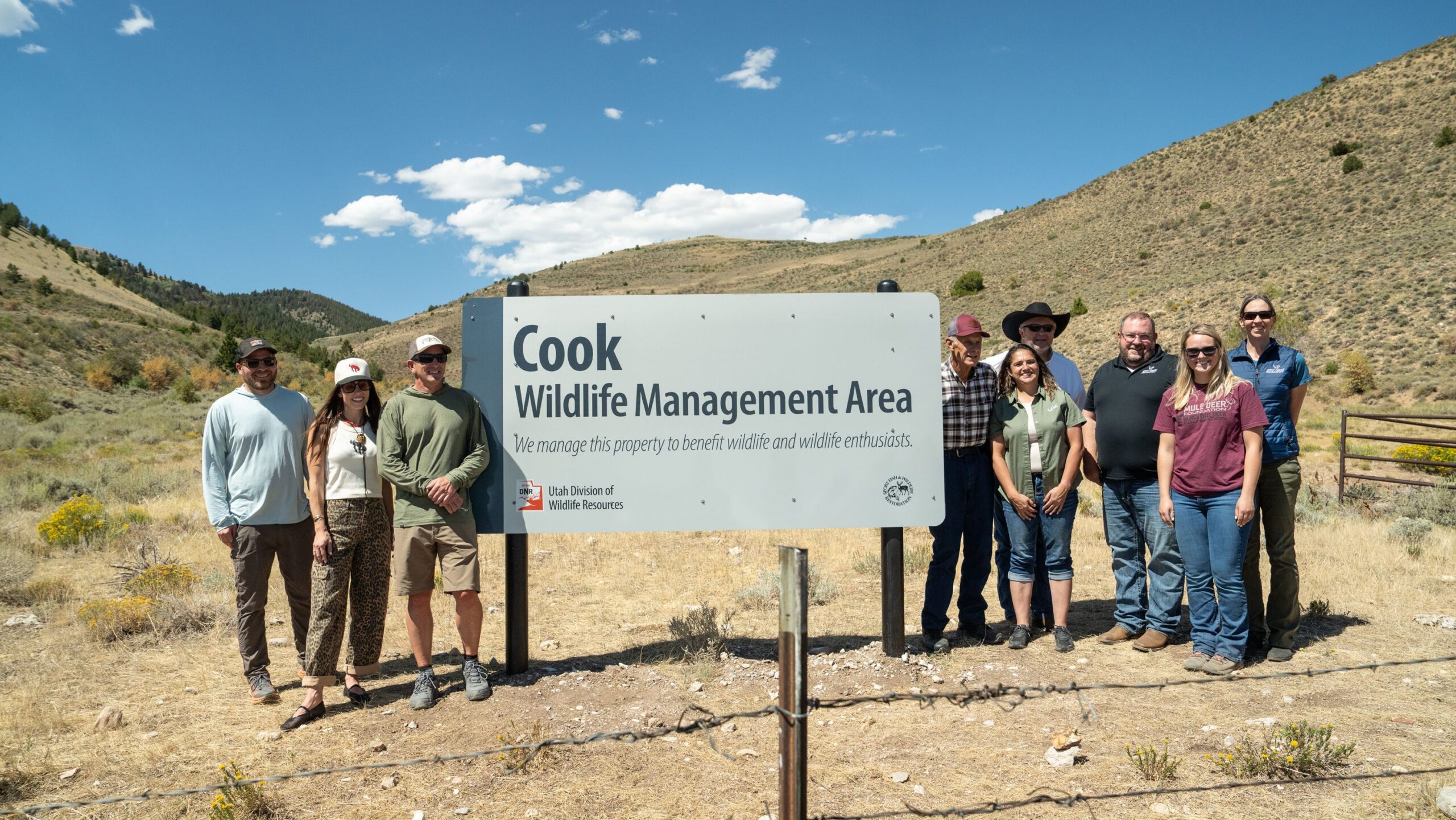
- NEW Cook Wildlife Management Area in Utah: Last week, MDF joined Utah’s Division of Wildlife Resources (DWR) for the ribbon cutting ceremony of a new wildlife management area (WMA) near the town of Manila. The Cook family had carefully cared for these lands since the late 1970s and approached DWR about keeping this land protected for their family’s legacy and for the many deer and other wildlife they have seen for decades. Funding from MDF and other conservation organizations made it possible for the state to purchase this property, ensuring it will remain wildlife habitat for generations to come. Through the Cook’s generosity, the public can also now enjoy walk-in recreation. Projects like the Cook WMA show what’s possible when landowners, agencies, and conservation groups work together to conserve habitat.
Working Together to Keep Landscapes Whole
Join us in making more conservation victories like this possible. Your support helps MDF study mule deer habits and habitat, fund wildlife management projects, and ensure that open landscapes like the Cook WMA remain wild, healthy, and accessible for all. Together, we can keep mule deer moving and thriving across the West. Become a member of your local MDF chapter!


