


The Long Game: A 5–10 Year Draw Plan for Mule Deer
By Trevor J. Hubbs
If you’ve hunted mule deer for more than a season, you already know this truth: the really good tags rarely happen by accident. Sure, lightning can strike in a random draw. But more often than not, those really rare mule deer hunts are the result of patience, planning, and a little bit of stubbornness stretched out over years.
I’m not a spreadsheet wizard. (That’s our Data team) I’m just a guy who hates sitting at home in October watching my phone buzz from buddies sending me pics of their notched tags. So over time, I’ve learned that if you want consistent opportunity, and maybe one or two truly special hunts, I need a plan that looks five to ten years down the road.
Here’s how I think about it.
Step 1: Be Honest About What You Want
Before you start throwing money at applications, ask yourself a few real questions:
- Are you holding out for a true trophy-class buck?
- Or do you just want to chase mule deer every fall somewhere in the West?
- Are you willing to wait 8–10 years for one tag?
- What’s your actual budget for applications and points?
- Do you care whether it’s archery or rifle?
There’s no wrong answer here. But your strategy should match your goals. If you just want to hunt, your plan will look very different than someone trying to draw one elite unit.
Why I Like Wyoming and Idaho
Every state has its pros and cons, but for this example I’ll focus on two that operate very differently:
- Wyoming — preference points, predictable, long game that’s easier to plan for.
- Idaho — no points, pure draw lottery for non-resident general tags.
One rewards patience. The other gives you a fresh shot every single year.
That combination keeps me in the game.
Years 1–2: Start Building and Don’t Overthink It
In Wyoming, buy your preference point. Even if you’re not ready to burn it, start the clock.
In Idaho, click apply. Pick a handful of units you’d genuinely hunt, that can be units close to home or just cool parts of the state you want to try.
The goal early on isn’t to hit a home run, just get on base.
Years 3–5: Get Serious About the Dream
By now you’ll have a few Wyoming points stacked up. This is when you start studying draw odds and thinking about which unit is “the one.”
Be careful about burning points too early. In Wyoming, if you draw your first choice, your points reset. Sometimes it makes sense to apply second or third choice just to keep building.
In Idaho, just keep applying. Since there are no preference points, you’re never “behind.” Every year is a new opportunity.
Year 6: Decide If It’s Time
At some point you’ll look at your Wyoming point total and think, “Alright… this might be the year.”
Maybe you go all-in on a limited unit.
Maybe you hold off one more year.
That decision depends on your tolerance for risk and how badly you want that hunt.
In Idaho, maybe you swing a little harder too, apply for a tougher unit now that you’ve studied the odds for a few seasons.
Years 7–10: Adjust, Don’t Drift
Life changes. Jobs change. Budgets change. States change their rules.
Every couple of years, step back and ask:
- Do I still want the same thing?
- Is point creep getting out of hand?
- Should I shift focus to another state like Colorado or Utah?
- Am I hunting enough right now?
The biggest mistake I see guys make is drifting. They apply every year but never reassess. A long-term plan only works if you occasionally tune it up. I have watched my own life go from spending 250 days afield writing about any outdoor pursuit I wanted to balancing taking care of a house and two little girls while still finding a few weeks a year to go afield. I went from looking for a Boone and Crocket monster to looking for 6-7 days in the mountains without the bluey theme song in the background.
A Few Things I’ve Learned the Hard Way
- Always have backup units.
- If you apply as a group in Wyoming, remember points are averaged.
- Budget for a “burn year.” When you cash in points, it might cost more than a typical season.
- Pay attention to rule changes. States adjust their systems a lot in ten years.
- If you’re young, time is your biggest asset. Use it.
Most importantly, hunt while you’re building. Don’t spend a decade collecting points and forget why you started.
Why I Believe in This Approach
It spreads out risk.
You’re building something in Wyoming.
You’re rolling the dice every year in Idaho.
You’re not stuck waiting forever, but you’re also not relying on luck alone. Most importantly, it keeps me engaged. Every winter application season feels like progress toward something even when I don’t draw a tag. Mule deer hunting has always required patience. A long-term draw plan is just an extension of that mindset.
Good Luck This Fall
Good luck this fall, everyone. If you draw something special or even if you don’t send your photos and stories to web@muledeer.org. You might see yourself featured on our website or in the magazine.
If this article has helped you think a little more strategically — or just encouraged you to stay in the draw game — consider joining the Mule Deer Foundation for $35 a year. Your support helps ensure we’re all still chasing mule deer 10 years from now.
Join here:
https://muledeer.org/product-category/membership/
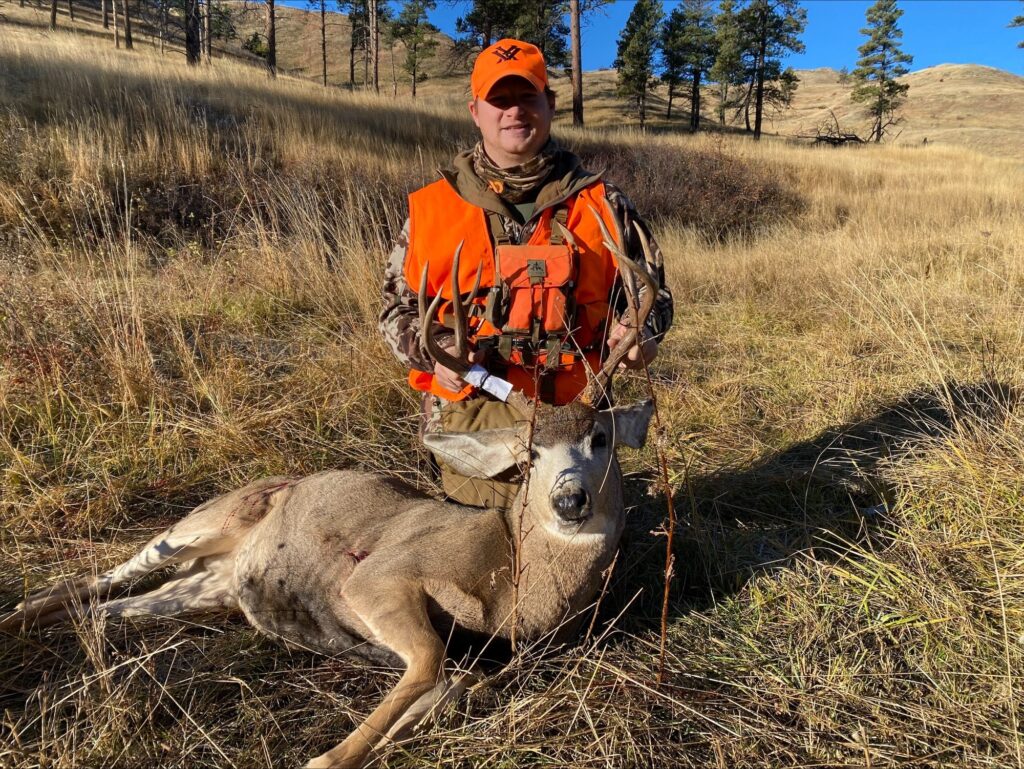
Trevor Hubbs
Trevor is the Communications Manager and Editor for the Mule Deer Foundation and Blacktail Deer Foundation. He grew up hunting and fishing the Ozark Mountains for quail, ducks, and bucks. These days, he heads west for mule deer whenever he’s lucky enough to draw a tag — or stubborn enough to keep trying.


