


Restoring Sagebrush Steppe in Central Nevada
By: Karina Puikkonen
March 30, 2026
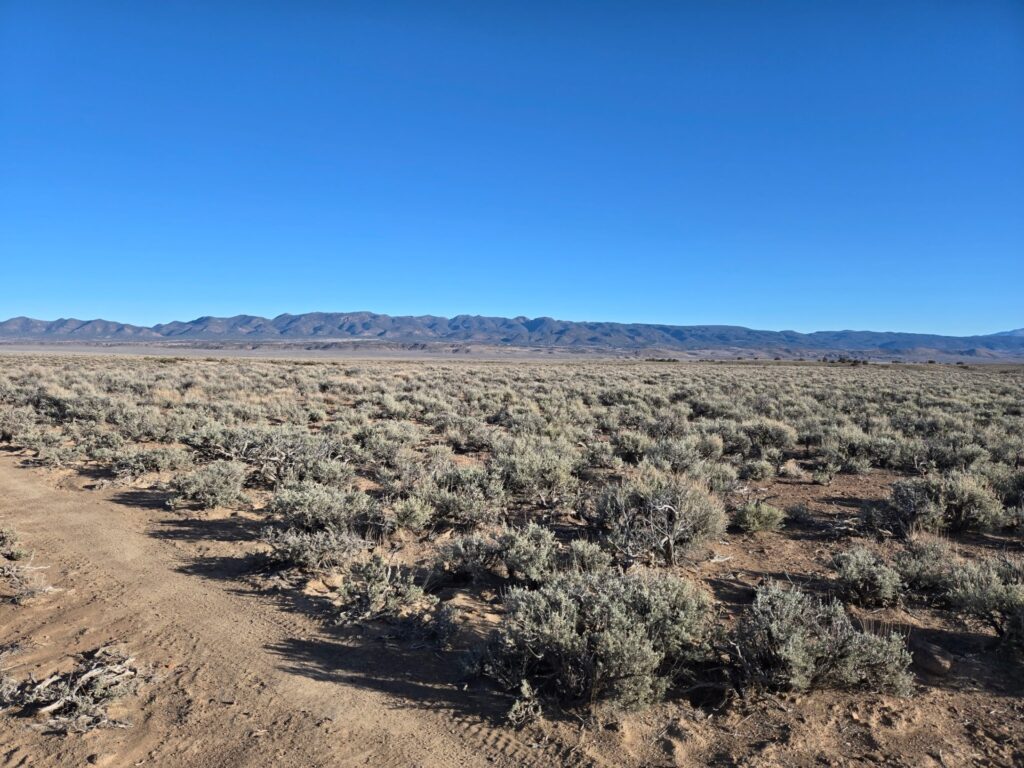
In the remote heart of central Nevada, Little Fish Lake Valley stretches for more than 40 miles, bordered by north–south running mountain ranges. The vast landscape is defined by open sagebrush and rugged beauty and yet has a conifer encroachment issue. This valley is just one of several mule deer winter ranges in this region, each valley lined with mountain summer ranges.
“It feels like sagebrush as far as the eye can see,” said Jackson Miller, the Mule Deer Foundation’s regional conservation coordinator for Nevada and California. “If that’s the habitat you’re interested in, it’s quite pretty.”
The Mule Deer Foundation has joined the Bureau of Land Management (BLM) and the Nevada Department of Wildlife (NDOW), in a large effort to improve mule deer winter range across the valleys in this region by restoring sagebrush steppe. By reducing conifer density, the first project in Little Fish Lake Valley jumpstarts this critical restoration for sagebrush ecosystems that support mule deer and other sagebrush reliant species in this part of the Great Basin Desert, while also mitigating wildfire risk that improves ecosystem function and resilience.
Identifying the Need to Address Conifer Encroachment
Amongst the beauty in these valleys, a conservation need has demanded action. Agency partners identified a common issue across each mountain valley: pinyon-juniper forests have steadily encroached into sagebrush and bitterbrush communities. These shrub communities provide critical winter forage and cover for mule deer and essential year-round habitat for species such as greater sage-grouse. The conifers absorb limited water resources, leaving ever larger areas of bare ground that can grow little else.
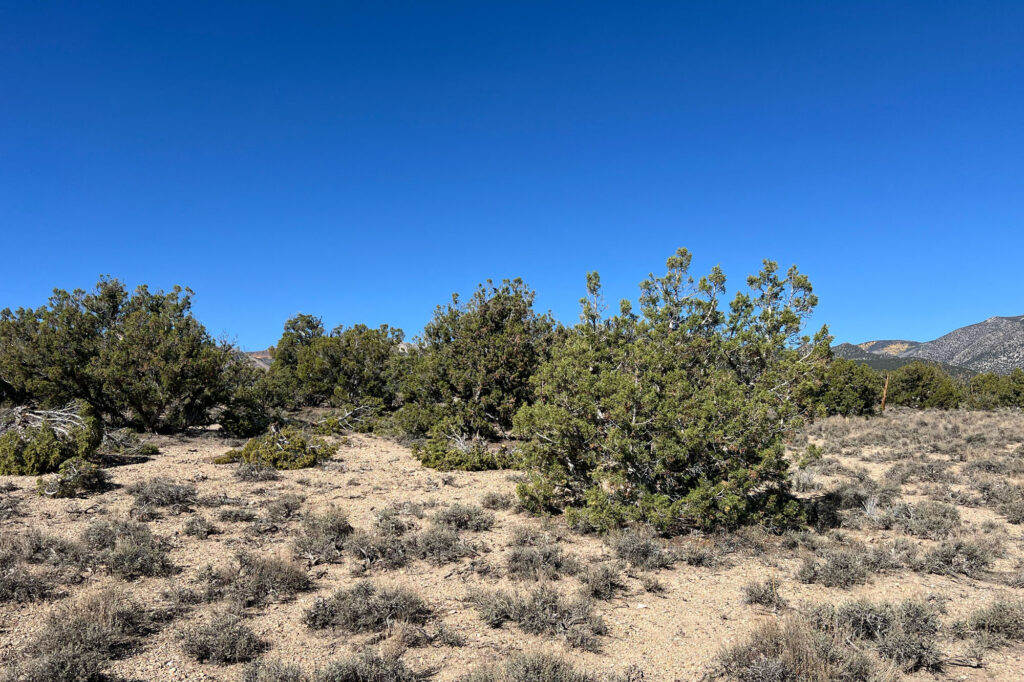
Aerial surveys conducted by NDOW over the past several years have shown declining mule deer numbers in the area. Mule deer fawn ratios as well as overall sample sizes have plummeted, with the overall current population estimate less than half of what was estimated in 2018. NDOW, along with the cooperation of local stakeholders identified pinyon-juniper invasion as a limiting habitat factor not only for mule deer in the Little Fish Lake Valley, but for other wildlife.
“Wildlife and deer spend a lot of time and energy moving across this landscape since there isn’t a lot of water,” Miller said. “Deer especially, have to graze long distances to maintain health.”
The sagebrush steppe alone covers over half of Nevada and supports more than 367 species of wildlife, including multiple plant and invertebrate species found nowhere else in the world. Removing conifers allows the growth of new shrubs, flowering plants, and grasses that are key components of mule deer diets, but also provides habitat for sage-grouse, pinyon jays, ferruginous hawks, and a wide range of other wildlife species that depend on open, healthy shrublands.
“We’re trying to get ahead of the problem,” Miller said. “One of the best things about this project is that all the stakeholders recognize this work is necessary. We all said let’s hop the fence and get this work done.”
In this hot and dry remote environment, the timing and location of any restoration work becomes critical. Winter and early spring coincide with sage-grouse breeding activity, making certain areas particularly sensitive during this period. Additional surveys during the planning process guided where pinyon-juniper removal could occur without negatively affecting other sensitive species, and MDF and agency partners carefully planned treatments around sage-grouse lek locations, nesting habitat, and seasonal wildlife movements. This thoughtful, landscape-level approach ensures that improving habitat for mule deer strengthens an entire ecosystem that can better support wildlife diversity in Little Fish Lake Valley.
Project Ahead of Schedule
Little Fish Lake Valley is a large project with over 18,000 acres identified for treatment. Last year, project implementation began in the summer with fall work continuing as conditions allowed, and two project phases completed. Minimizing the ground disturbance, two hand crews made steady progress in the open landscape. The crews completed roughly 6,500 acres in these first two phases, with another 7,000 acres of treatment planned for this year, and an additional 5,000 acres identified beyond that.
“No heavy machinery was needed during the first phases of this project,” Miller said. “We removed the younger pinyon and juniper trees, leaving the old growth trees to provide cover and shade.”
The goal for Central Nevada is to have landscape-scale impact. Beyond the Little Fish Lake Valley, other treatments are on-going on nearby Morey Bench and neighboring Monitor Valley. The hope is to follow up these treatments with native seeding to boost restoration. The U.S. Department of Agriculture (USDA), Forest Service is also in the planning phase for summer range restoration work in the mountain ranges of Humbolt-Toiyabe National Forest.
One of the most encouraging aspects of the Little Fish Lake Valley project is the shared understanding among all the partners. MDF, NDOW, BLM, and the USDA Forest Service all recognized that the entire landscape needs work, and that wildlife need quality habitat beyond each administrative boundary to thrive.
For mule deer that must travel long distances in a dry landscape with limited water, connected, healthy habitat is essential. By addressing this conifer problem at a large scale, this large partnership hopes to secure the future of Little Fish Lake Valley, not just for mule deer, but for the full suite of wildlife that depends on this Central Nevada landscape.


