


On Location: The Crossroads Project Part 2
Working In, For, and With Rural America
By: Nicole Reed-Fickel
The U.S. Department of Agriculture (USDA), Forest Service manages nearly 200 million acres of public land all over the country. That’s a lot of ground to cover and a huge responsibility.
“These are the crown jewels of the United States,” explains Randy Morrison, Director of Conservation Operations for the Mule Deer Foundation (MDF). “It’s some of the most important land we have, and it’s here for us to enjoy. You don’t have to be wealthy. Any citizen of the United States, any visitor, can come and enjoy this ground.”
The Crossroads Project
The recent Crossroads Project in Lassen National Forest near Burney, California is an example of collaborative work in national forests. Here, MDF, the USDA Forest Service, and residents have treated over 2,400 acres to reduce wildfire risk, restore ecosystems, and improve recreation—all while stimulating the local economy.
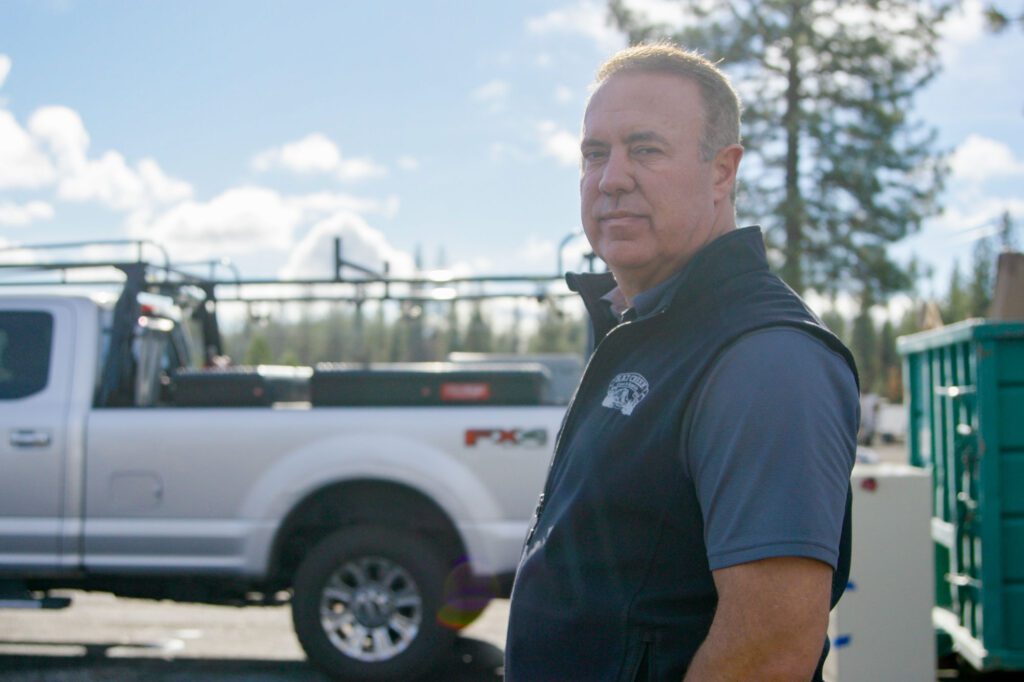
“We’re really excited about the Crossroads Project,” says Perry Thompson, a lifelong Burney resident and owner of Hat Creek Construction. “The Mule Deer Foundation partnering with the [USDA] Forest Service right here in our local community, protects this property, the forest, and the habitat that depends on it. They’re creating tremendous jobs and sustaining wages that pour back into this community. It’s just awesome to see our tax dollars having incredible positive effects on the community, wildlife, and local families.”
Why Partnerships Matter
Western forests face increasingly large and destructive wildfires. These fires threaten not only forests and grasslands, but also power lines, water supplies, homes, and entire communities. Managing the challenges in all these public lands requires strong partnerships. The USDA Forest Service relies on conservation groups and local contractors who know the landscapes best and whose lives are directly connected to them. These partnerships are essential for protecting both forests and the rural towns that depend on them.
“In June through September, everyone here has a go-bag ready,” says Zach Craft, MDF’s Habitat Protection Coordinator and local resident. “That threat is always there.
To meet these challenges, the USDA Forest Service is expanding partnerships with proven organizations like MDF. Originally founded as an advocacy group, MDF has grown into a leader in forest restoration with a demonstrated track record of success. Healthy, resilient forests are key to thriving mule deer populations—and to safe, vibrant rural communities.
Working together
For nearly 40 years, MDF has partnered with the USDA Forest Service on projects that reduce wildfire risk, restore ecosystems, and support local economies. The collaboration combines MDF’s on-the-ground agility to mobilize work on the ground with the Forest Service’s national scope and structure.
“Conservation minded NGOs [Non-Governmental Organizations] like the Mule Deer Foundation, have partnered with state and federal agencies,” explains Randy Morrison. “We put together these fuels reduction projects with their assistance, and then bring in contractors from the local communities, so we’re helping local economies as well.”
MDF has proven their capacity to plan, coordinate, and deliver ecosystem rehabilitation projects on private and public lands. MDF recruits agile teams who work with local contractors and community members to accomplish targets set by the Forest Service. These efforts allow healthy forests to still burn, but the fires are smaller, less intense, and less destructive.
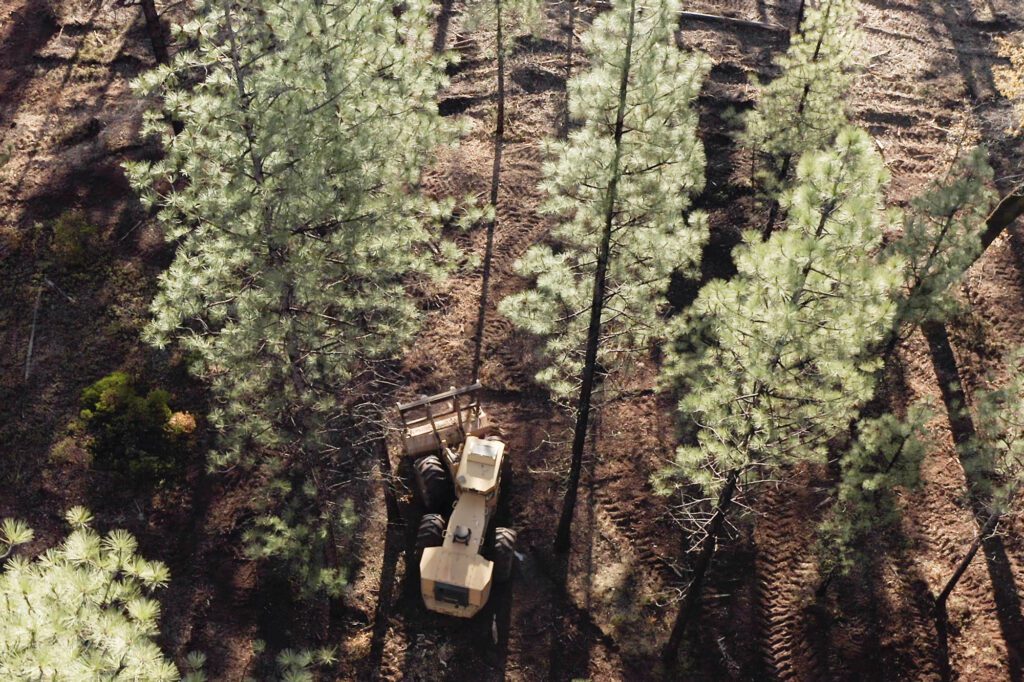
Forest crews tackle the tough work of restoring balance to the forest. They clear out dense undergrowth that fuels dangerous wildfires, thin overcrowded stands of trees, remove invasive species, and replant native trees and shrubs that are better prepared for natural fire cycles. It’s demanding, hands-on labor—but it’s essential to protect our national forests, safeguard nearby communities, and sustain the iconic wildlife, like mule deer, that depend on these landscapes.
A Record of Success
The results speak for themselves. MDF has helped the USDA Forest Service already treat over 276,000 acres of national forest land across the Western U.S., with another 151,000 acres underway. These projects make forests safer, support rural economies, and improve habitat for mule deer and countless other species.
This partnership between the USDA Forest Service, MDF, and local communities shows what’s possible when public funds are invested wisely: stronger communities, healthier forests, and wildlife habitat that future generations can enjoy.
Learn how The Crossroads Project utilizes the strengths of the USDA Forest Service and MDF in Part 3 next Tuesday! Support these efforts and become a Mule Deer Foundation member! Subscribe to the Mule Deer Foundation Media YouTube Channel and get notifications on the last installment of the Crossroads Project video series!


