


Aspen Regeneration on Wyoming’s Snowy Range
By: Karina Puikkonen
On the western side of Wyoming’s Snowy Mountains, a collaborative conservation effort between the U.S. Department of Agriculture (USDA), Forest Service; the Mule Deer Foundation (MDF); and the Wyoming Fish and Game Department (WFGD) is bringing new growth to struggling aspen stands that serve as crucial transitional range for the Platte Valley mule deer herd.
The 184-acre Ryan Park Aspen Regeneration Project site is near the small rural community of Ryan Park, one of the gateways to year-round recreation in the Snowy Range Mountains and Medicine Bow National Forest. Completed in September, this project represents a very strategic and science-based approach to habitat work that benefits wildlife and rural communities.
Helping the Platte Valley Herd
The Platte Valley mule deer herd is a priority herd for WFGD. The Ryan Park Aspen Regeneration site sits along transitional habitat just a half-mile from the Platte Valley mule deer migration corridor. This corridor is a highway for approximately 11,000 mule deer moving between summer and wintering areas in the Platte Valley, Sierra Madres, the Snowy Range, and even as far as North Park, Colorado. Mule deer studies in the region show that they are loyal to these corridors, making habitat along these long-established routes critical to the overall health and growth of this herd.
Compounding Pressures on Aspen
Aspen stands across this region face mounting pressures. Conifer and juniper encroachment have been invading aspen areas for decades, and the recent occurrence of disease has added to the loss of vital aspen ecosystems that hundreds of wildlife, birds, and insect species rely on.
Conifer and juniper trees soak up much of the available water, with little left for other plants and trees, like aspen. That’s why bare ground typically surrounds evergreen trees, and an abundance of forbs, grasses and shrubs surround aspen trees. Aspen trees, rely on intact clonal root systems that allow them to regenerate quickly after a disturbance, but these root systems can also make them more susceptible to disease. For mule deer, any habitat loss is particularly concerning in aspen stands because they provide essential browse and forage for herds in high-elevation mixed forests.
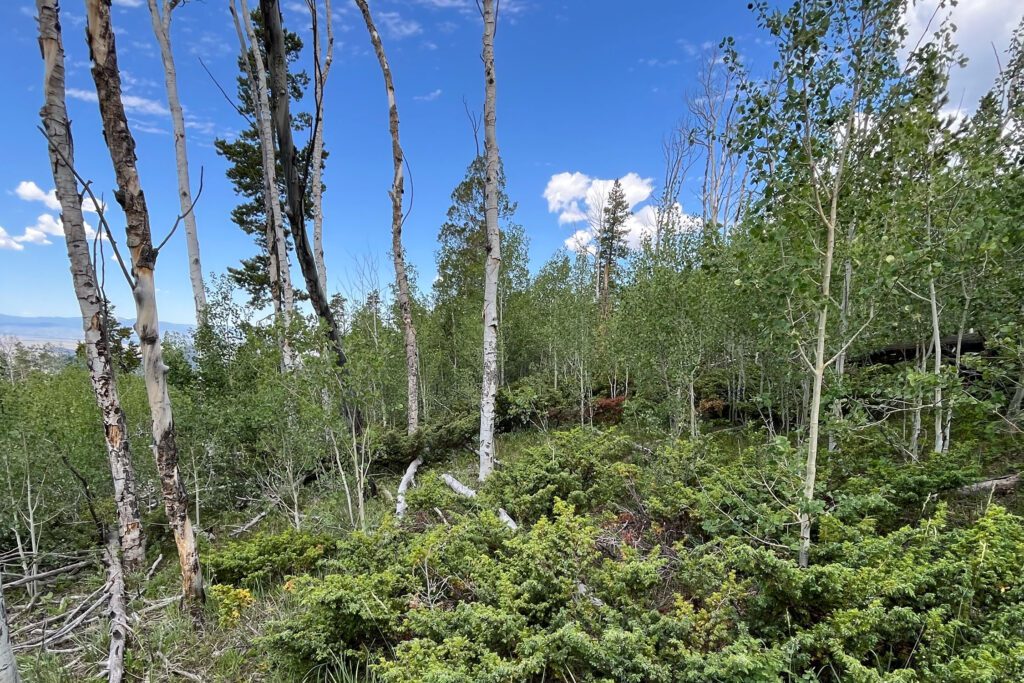
The regional pine beetle epidemic of the early 2000s has also left massive amounts of dead and downed timber, and along with the aggressive conifer encroachment, both have created severe wildfire risks for the area. Last year, a lightning strike near the project site was quickly put out, but it served as a stark reminder of the ever-present wildfire danger surrounding this forest and the Ryan Park community.
Mule Deer Foundation Teams up
That’s why the USDA Forest Service has been doing thorough fuels mitigation projects within watersheds around the Ryan Park Community over the last 10 years. Aware of the specific needs within the Ryan Park project’s aspen stand, the agency recruited help from MDF and WFGD to continue the efforts to improve wildlife habitat and mitigate wildfire severity.
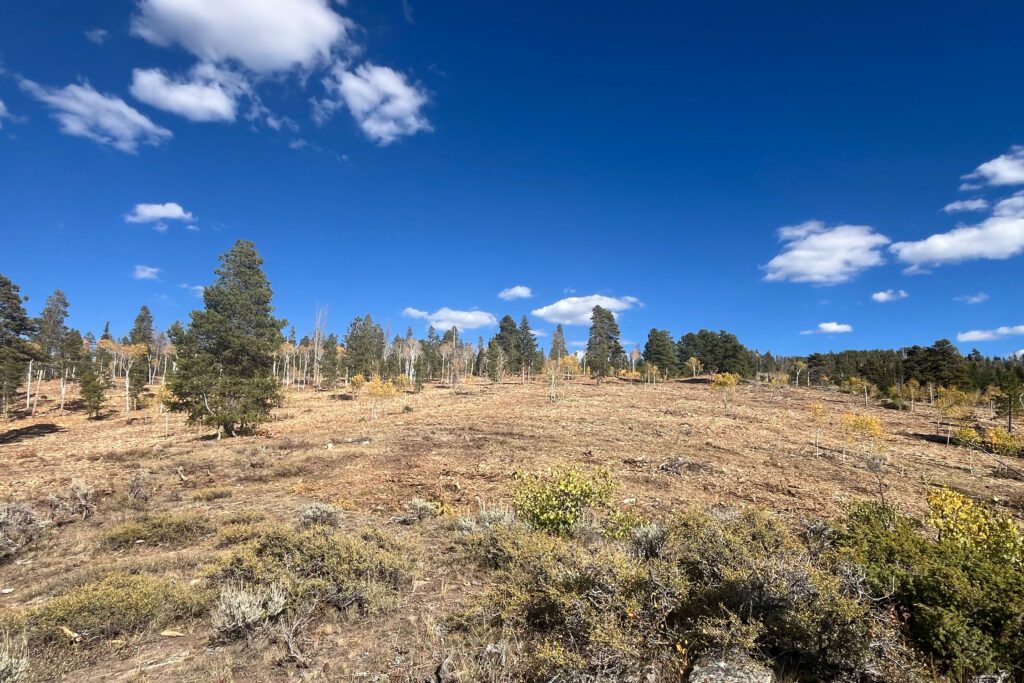
The project targeted the root causes of this aspen stand’s decline: conifer encroachment and disease. Mastication removed ground juniper and conifers while leaving the ponderosa pine trees standing, while aspen thinning removed much of the diseased overstory. Thinning this overgrown vegetation also created a natural fire break on the landscape. The aggressive approach may look bare initially, but aspen rely on disturbance to thrive, and turning the dirt has already triggered a regeneration response aspen are known for.
Early Observations and Success
During site preparations in late May, MDF’s Aidan Downey observed 30 mule deer does along the aspen stand’s edge that did not have junipers, showing what habitat these deer prefer. Downey said a similar WFGD project completed on the north side of the Snowy Range last year offers an astounding glimpse into the future.
“That other site now boasts thousands of aspen saplings per acre just one year later, with deer seen browsing regularly on the regenerating growth,” Downey said.
Downey also recounted a USDA Forest Service partner telling him that he counted several deer in one 50-acre parcel of that post-treatment area. Even more remarkable during that project, deer were seen standing calmly just 50 yards from operating masticators, taking immediate advantage of the freshly opened habitat.
Since the Ryan Park Aspen Enhancement Project completed, outcomes are already beginning to pop up from the ground. During one of Downey’s site visits just a week or two after the project concluded, he saw tiny aspen sprouts everywhere in the new, open ground. Plus, he said he saw sage-grouse eating the fresh forbs that had also sprouted up from the disturbed soil. As the Platte Valley Herd’s fall and spring migrations continue, these deer will now have new, regenerating growth in this aspen stand to eat during the journey.
Looking Ahead
The success of these projects continues to inspire and drive additional restoration efforts that MDF will take part in. A similar treatment for an adjacent area is already in the planning stages with MDF, the USDA Forest Service, WFGD, and Saratoga-Encampment-Rawlins Conservation District. This habitat work has proven that when federal agency, conservation organization, and community goals align, remarkable things happen. The Ryan Park Aspen Regeneration project isn’t just about removing trees. This work creates natural fuel breaks, revives transitional mule deer range, and ensures that an important mule deer herd in Wyoming has the habitat they need to keep moving across the Southeast Wyoming landscape.


