


Wildlife Funnel Fencing Innovation in Central Idaho
By: Karina Puikkonen
The Idaho-Montana border is a migratory hot zone. The Idaho Department of Fish and Game (IDFG) has collected years of collared data from elk, mule deer, pronghorn, and moose moving across this area. It is well-known that the Beaverhead mule deer herd crosses the border each spring to summer in Montana and then returns to Idaho each fall to winter around the Lemhi Valley. This remote part of the state includes small towns with private lands surrounded by public lands, making wildlife crossings on Highway 28 a dangerous endeavor for wildlife and drivers.
“Mountain streams run to the bottom of the valley, and wildlife use the river, creeks, and sagebrush on these public and private lands,” Jessie Shallow, a partner biologist between the Mule Deer Foundation and IDFG, said. “Highway projects can intersect state priority areas and important crossing and wintering areas for mule deer and other wildlife.”
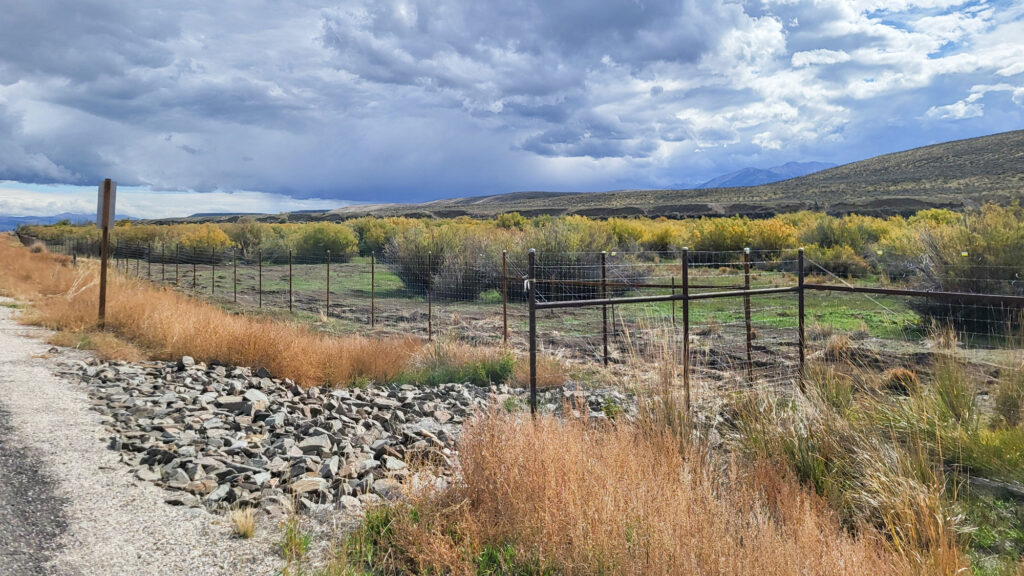
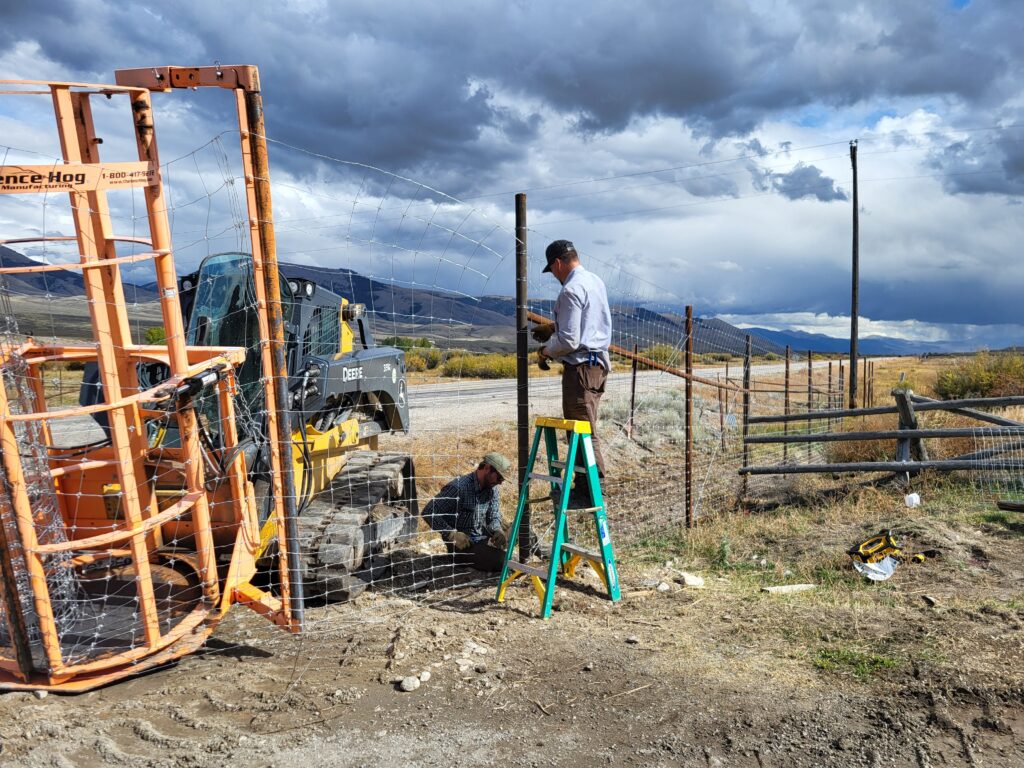
With funding from the National Fish and Wildlife Foundation, IDFG, and the Idaho Transportation Department (ITD), the Mule Deer Foundation (MDF) helped these state agencies complete the final phase of the Highway 28 project. Now, 2.6 additional miles of new funnel fencing exist on both sides of the highway. This extension expands upon the three miles of fencing first installed in 2020, which directed animals toward two bridges designed to support wildlife movement, along with added highway escape ramps and multiple public access gates.
Each project partner has a vested interest in providing big game species with safe crossings. This final phase of the Highway 28 Project is distinctive because it incorporated a unique gate innovation Shallow brought forward to add another way wildlife can escape the highway, while the additional fencing stretches to an open area where wildlife can more easily be seen. It provides mule deer and other big game with safer passage to critical winter range, improving their chances of surviving the harsh wintry months. Drivers will also benefit from far fewer collisions, making this stretch of highway much safer for everyone.
The Need for More Wildlife Funnel Fencing
The 2020 funnel fence was built to direct animals to bridges that serve as wildlife underpasses. This fence has been very effective, with animals seldom getting trapped on the highway. The few that have in recent years, have walked around the ends of the funnel fence, discovered open public access gates, or found fencing holes. Animals have successfully used dirt mounds along the highway side of the fence to escape the highway easily, but the public access gates (designed for angler access) have become ineffective after some deer have found ways to use them as passage points back onto the highway.
“Deer can get frustrated if they can’t get across or under a highway every one mile, so that becomes the minimum requirement to ensure there is a crossing,” Shallow said. “If an animal unfortunately gets trapped on the highway, they may pace if an escape isn’t within a quarter mile, which is dangerous along the highway.”
This stress can produce unpredictable behaviors in deer that are dangerous for both deer and drivers. An update and extension along this highway stretch was needed. From her past research and experience on other projects, Shallow brought a new fencing innovation to the Highway 28 project that addressed this public access gate issue. The new gates help animals exit the highway easily, and get back on the safe side of the fence.
Fencing Innovation: Liberty Gates
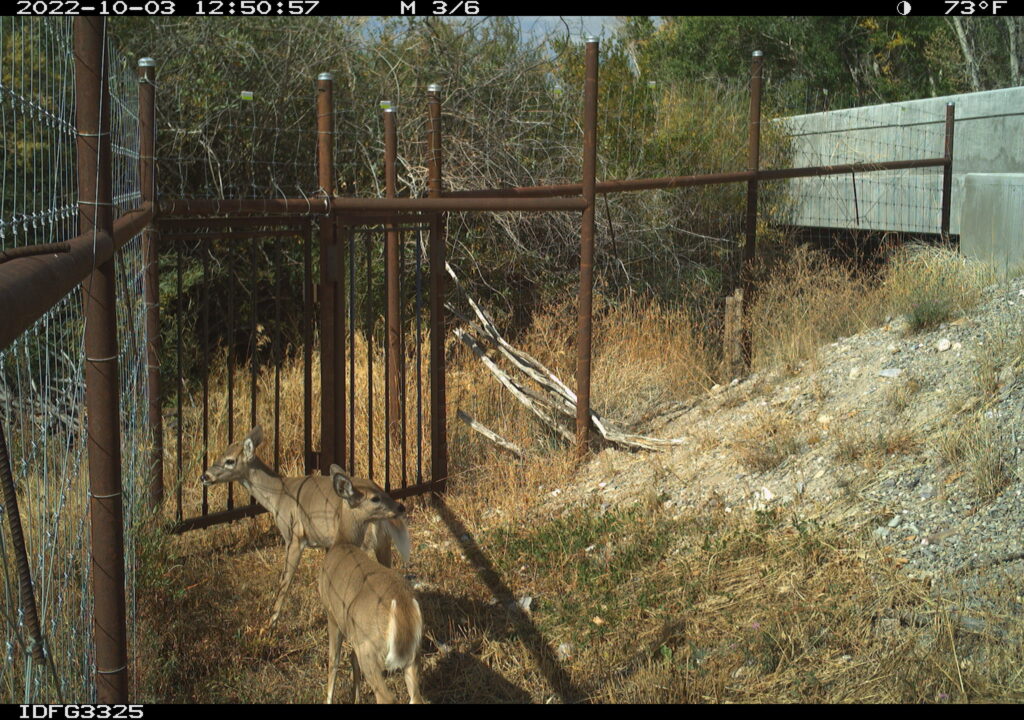
During this latest project phase, the two-way public access gates were replaced with one-way access gates for wildlife. Shallow calls the new one-way modification, “Liberty Gates.”
“Instead of a gate that can open both ways, these liberty gates open just one way from the highway side,” Shallow said. “Since animals can’t get back through, the fence then funnels them to other crossings under the highway.”
On first glance, the one-way Liberty Gates initially look like they are impassable. Long vertical bars are spaced a handful of inches apart and look like they are connected to a horizontal plate at the bottom. However, the vertical bars are only connected at the top, and the long bars just swing forward as animals walk through them. The horizontal plate at the bottom keeps animals from being able to push the bars back toward the dangerous highway.
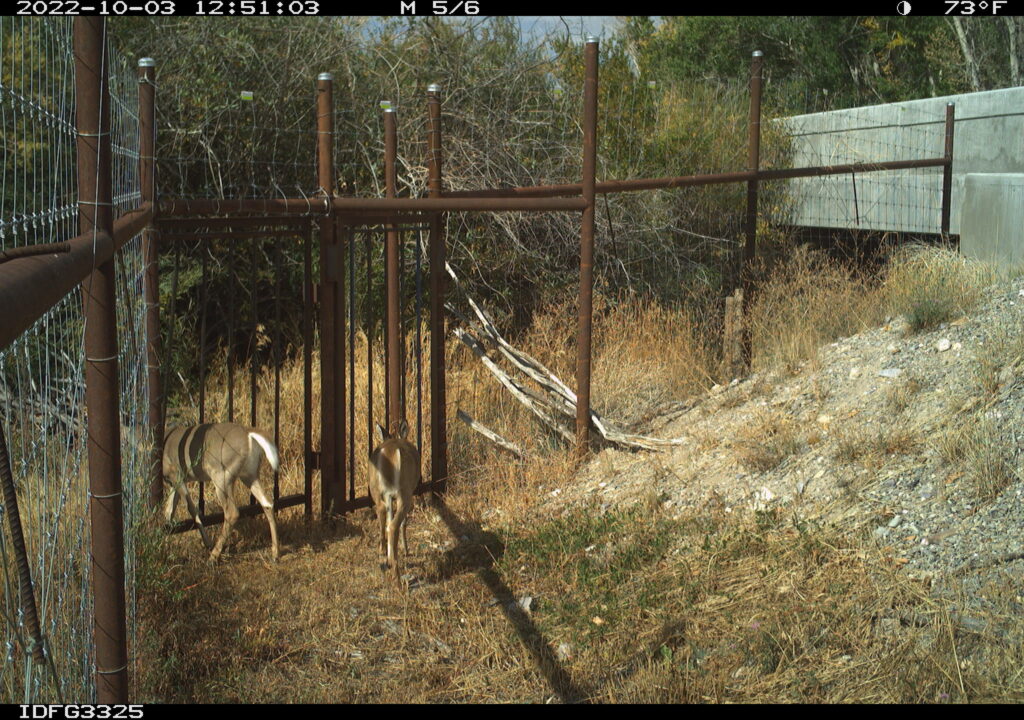
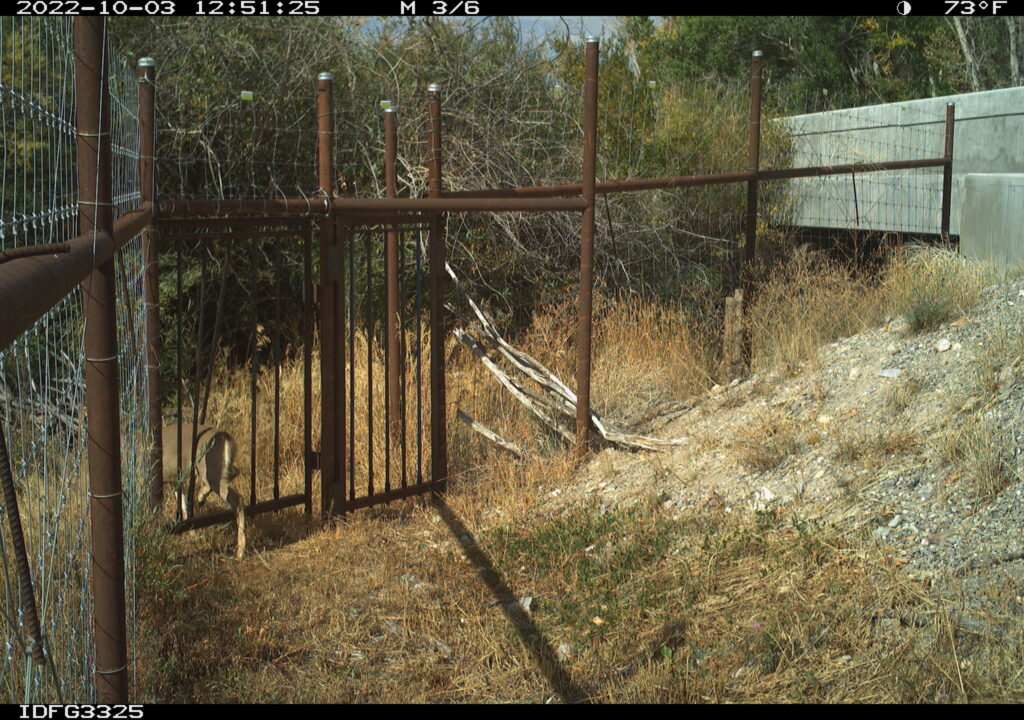
“In some of my early testing years ago, my five-year old at the time could figure it out,” Shallow said. She added that the Liberty Gates still work both ways for fisherman, in addition to helping the few animals that may need an exit if they somehow still find themselves on the highway.
During her early tests, Shallow also learned that fence corners are the best locations to place these gates. When one gate was put along a straight section of the funnel fence, Shallow said zero animals would pause long enough to attempt them. Once the second gate was placed in the corner, deer went through eight out of 10 times. With this vast improvement in access gate design, the animals can also better follow the funnel fence to the underpasses on their reverse journey.
The Highway 28 project shows what’s possible when good data, practical innovation, and strong partnerships come together. By improving fencing designs and existing infrastructure, MDF and Idaho’s state agencies have created a safer, more functional migration route for mule deer and other big game moving through the Lemhi Valley. These solutions will certainly reduce wildlife-vehicle collisions, but they also respect the realities of working landscapes, by balancing the needs of wildlife, landowners, and drivers alike. As migration pressures continue to grow across the West, projects like this one prove that thoughtful, cost-effective design can deliver lasting conservation gains at the landscape level.


